
TL;DR
- A 10-year shelf life claim is meaningful only when it comes with the storage conditions and the retention figure that were measured, because “10 years” without conditions is not a test result.
- Ask for a leak resistance report that states the temperature, humidity and duration, since published leak testing on this class runs at 60 degrees C and 90 percent relative humidity for 30 days rather than at room temperature.
- Ask for a capacity retention figure at a stated storage interval, because retention expressed as a percentage of original capacity is the only form of the claim that can be checked.
- Ask for the IEC 60086 conformity evidence for the specific size and chemistry, since compliance is claimed per designation rather than per brand.
- Ask for the date code control description, because a shelf life claim is unenforceable if production date traceability is not documented.
- Ask for the test method reference behind every number, because a retention percentage without a stated method cannot be reproduced by anyone else.
What a 10-year shelf life claim actually asserts
A 10-year shelf life claim on alkaline cells is a test result obtained under stated storage conditions, and the conditions are not a footnote to the claim; they are the claim. Strip the conditions out and the figure becomes a marketing line that means nothing, because a cell that reliably holds capacity for a decade at moderate temperature is a different product from one that does so at a specified combination of heat and humidity.
The confusion is understandable because shelf life language in this category covers several different things at once. Some published figures state a leak-free period, meaning the seal holds and nothing escapes. Some state a capacity retention percentage at a stated interval, meaning usable energy remains. Some state a calendar figure tied to a temperature and humidity band. And some are working-range claims, meaning the cell performs correctly across a span of temperatures, which is a different statement again about a cell in use rather than a cell in a warehouse.
Look at real figures from a single range and the spread is instructive. One published specification states a ten-year anti-leakage shelf life for AAA cells, attributed to improved anti-corrosion components and a revised zinc formulation. Another states up to ten years for D cells, supported by a leakproof seal design and production date code freshness. A C cell is published at five years leak-free. A 6V 4LR25 lantern cell is published at two years after delivery, stated specifically at 20 plus or minus 2 degrees C and 65 plus or minus 20 percent relative humidity. These are not different claims about the same chemistry; they are claims about different cells with different failure exposure.
So the first question to put to any supplier is not “do you have a ten-year cell” but “which cell, under which conditions, measured to what retention.” A supplier who answers the first question and not the second has not told you anything you can put in a purchase order.
Why different sizes carry different shelf life figures
The spread across a range is not marketing inconsistency, it is the failure mechanisms being size dependent, and a supplier quoting one figure for an entire range is overstating the smaller cells or understating the larger ones.
The relevant difference between a AAA and a D cell is surface-to-volume ratio combined with the amount of electrolyte and the volume of gas space. A small cell has proportionally more seal and less internal volume, so what dominates is often leakage through the seal under thermal cycling. A large cell has more electrolyte and more gas space, and what dominates is self-discharge, because a larger reservoir of electrolyte loses a greater absolute quantity of capacity over a year. The two failure modes need different tests, which is why a range that publishes from two years to ten years is describing different mechanisms rather than different marketing ambition.
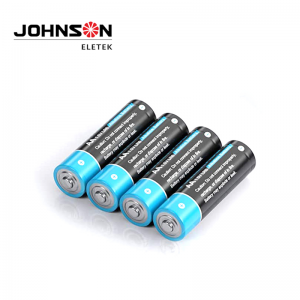
This is also why the size-specific language in a purchase specification is worth being pedantic about. If your range includes AA, AAA and a 9V cell, those are three separate claims and they should appear as three separate lines with three separate retention figures attached. A single line reading “10 years” across the range will be true of the AA and misleading for the rest, and you will discover the difference when a customer returns a pack they bought two years ago.
Leak testing and retention testing are not the same test
A supplier showing you a leak resistance report has demonstrated seal integrity and nothing at all about how long the cell will hold usable charge, and the two reports are routinely confused in conversation.
They measure different failure modes with different consequences. Leak testing asks whether the cell’s closure holds under accelerated thermal and humidity stress, because leakage is what damages the appliance and the cells stored next to it. Retention testing asks how much usable energy remains after a defined storage period, which is what a consumer experiences as the battery dying in a remote control.
Published conditions in this category show how far apart the two are. Leak testing for one AAA cell runs at 60 degrees C and 90 percent relative humidity for 30 days with a pass condition of no leakage. The published shelf characteristic test for an AA cell stores the battery at 65 degrees C for 14 days and then measures capacity. And the retention figures are stated on a much longer clock entirely: at least 80 percent of original discharge capacity after twelve months at specified conditions for a D cell, and 85 percent of original charge after three years for a 12V A23 cell.
Note what the accelerated tests do not do. A cell held at 60 degrees C for thirty days has been subjected to roughly thirty days of stress that would take years to accumulate at ambient, and it is that acceleration which makes leak testing affordable to run on a production sample. But acceleration is also why a leak result cannot be converted into a shelf life figure by arithmetic, and a supplier who offers to do the conversion for you is guessing. The retention figures have their own clock and they are the ones that describe the ten-year claim.
The five documents to request
Five documents turn a shelf life claim from an assertion into something you can verify, and the order below is the order in which they are worth requesting, because each one eliminates a different way of being misled.
1. Leak resistance report with its conditions stated
Request the report and check three things in it: the temperature, the relative humidity, and the duration. A report that records a pass without naming the conditions has told you nothing, because the entire content of a leak test is the severity of the stress it survived. Published conditions in this category give you the benchmark to compare against, including storage at 60 degrees C and 90 percent relative humidity for 30 days without leakage.
What to reject: a summary stating that the product passed leak testing, with no parameters. That sentence is compatible with almost any level of testing and therefore carries almost no information.
2. Capacity retention report at a stated storage interval
This is the document that actually supports a shelf life claim, and the single most important thing in it is that retention is expressed as a percentage of original capacity at a defined interval. A percentage is checkable; a description is not.
Published benchmarks to compare against are no less than 80 percent of original discharge capacity after twelve months of storage at specified conditions, and 85 percent of original charge retained after three years storage. Both are stated as percentages against an interval, which is the format to insist on.
What to reject: a figure described as “long shelf life” or “up to ten years” with no retention percentage anywhere. That is a calendar promise without a capacity basis, and it cannot be compared against another lot or another supplier.
3. IEC 60086 conformity evidence for the specific size
IEC 60086 conformity is a real and valuable claim, and it is not a shelf life claim. The series is published by the International Electrotechnical Commission, and it covers primary batteries across dimensions, designation, performance and safety requirements. A published specification for this range states plainly that battery dimensions comply with IEC 60086-2.
Two things make this document worth having. First, compliance is claimed per designation rather than per brand, so it gives you a checkable statement tied to the exact cell you are buying. Second, the safety and performance requirements in the series are meaningful independently of any marketing claim, and conformity to them is something a third party can verify rather than something a supplier asserts.
What to reject: any argument that treats a compliance mark as though it settled the shelf life question. It does not, and a compliance certificate does not contain a retention figure. Related parts of the same series, such as IEC 60086-5, cover different aspects of the same battery requirements and are worth asking for alongside the dimensional part.
4. Date code control description
A shelf life claim is unenforceable if production date traceability is not documented, because the claim starts at production and not at shipment.
A published specification in this category states that leakproof seal design combined with freshness of the date code can keep power supply available for up to ten years until it is needed. That sentence is worth reading twice, because it identifies the date code as the mechanism that delivers the claim rather than an incidental label.
Ask for three things specifically: the date code format, the point in the process at which the date is applied, and how the code is printed on the pack format you have chosen. If a cell reaches your customer three years after production carrying a freshly printed code, the ten-year claim has quietly become a seven-year claim, and no document in your file would reveal it.
5. The certificate file, not the certificate claim
Ask for the certificate itself, with its issuing body and number, so you can confirm it against that body’s public database. The published range in this category carries CE, KC, RoHS, REACH and IEC marks, and it is worth knowing what each of those actually addresses.
- CE is a manufacturer’s declaration that the product conforms to applicable European directives. It is not third-party tested and it is not a performance claim.
- RoHS restricts hazardous substances in electrical and electronic equipment.
- REACH is the European chemicals regulation covering registration, evaluation, authorisation and restriction of substances, which is why composition claims such as mercury and cadmium free are meaningful in this category.
- KC is the Korean certification mark, and a supplier holding it is addressing a market you may or may not be in.
- IEC 60086 covers the battery standard itself, as above.
None of these is a shelf life claim, and none of them contains a retention figure. Where a supplier presents a wall of certification marks in the same breath as a ten-year figure, the marks are there to create an impression of rigour rather than to substantiate the number.
| Document | What it proves | What it does not prove |
|---|---|---|
| Leak resistance report | Seal integrity under stated temperature, humidity and duration | Usable capacity after storage, or any calendar shelf life figure |
| Capacity retention report | Percentage of original capacity remaining at a stated interval | Seal integrity under stress, or long-term leakage behaviour |
| IEC 60086 conformity evidence | Dimensional, designation and standard performance compliance for that size | A specific retention figure or a calendar shelf life promise |
| Date code control description | How production date is determined, applied and printed | That the cells themselves hold capacity for the claimed period |
| Certificate file | Restricted substance compliance and market access for named markets | Performance of any kind, including capacity retention |
What changes when the batteries carry your brand
In a private label programme the shelf life claim on the pack becomes your liability rather than the manufacturer’s, which changes which of the five documents you actually need first.
When a supplier prints their own brand, a shortfall on shelf life is a conversation between you and them. When you print yours, the consumer who reads “10 years” on your pack has no way to know a different company assembled it, and the claim is presented with your name on it. The verification burden does not increase in effort, but it does shift in character: you are no longer protecting yourself from someone else’s marketing, you are protecting yourself from your own.
Packaging formats make this concrete. Private label alkaline programmes in this category run with aluminium foil, blister, shrink, inner box and outer box formats, with logo artwork available, and cells supplied in multipacks such as a 48-piece colour box. Each of those formats creates a different question about date code legibility and pack integrity.
- Blister and shrink formats usually leave the cell visible, so a legible code on the cell is achievable but a legible code on the card is what the consumer sees.
- Colour box multipacks put the date somewhere the consumer will never look, which is fine for your records and useless for a customer trying to check freshness.
- Inner and outer box formats add a layer where code errors happen, because the inner pack code and the outer case code are often printed from different systems.
So the question worth asking your supplier is specific rather than general: how is the date code printed, on which layer, in what format, and does that format survive the packaging format I have chosen. A ten-year claim is only as real as the date it is measured from, and the date is printed by your packaging supplier.

The storage conditions that actually decide the claim
Collect the stated conditions for every cell in your range, because they tell you which claim belongs to which product, and they are frequently the part of a datasheet nobody reads past the first line.
The published figures in this category cover a wide spread and they are not interchangeable.
- A D cell is published as usable from minus 4 degrees Fahrenheit to 125 degrees Fahrenheit, with a discharge time of more than 1800 minutes and a retention requirement of at least 80 percent after twelve months at specified conditions.
- A C cell is rated from minus 40 to plus 60 degrees Celsius with stable performance from minus 18 to 55 degrees Celsius, and its capacity is published at six to seven times that of a carbon zinc cell.
- A 4LR25 lantern cell states two years after delivery at 20 plus or minus 2 degrees C and 65 plus or minus 20 percent relative humidity, with its discharge test run at a 5 watt plus or minus 0.5 percent load, measured over 0.3 seconds at 20 plus or minus 2 degrees C within 30 days of production.
- An A23 12V cell is published at 85 percent of original charge retained after three years storage.
Note the distinction running through all of these. A working range is a claim about a cell in a device. A storage condition is a claim about a cell in a warehouse. And an accelerated test condition is a claim about a cell in a test chamber. Three different statements, and a supplier who uses one in place of another has not answered the question you asked.
Where this checklist has limits
No document set makes a supplier trustworthy, and a complete file of test reports can still sit on top of a product that does not perform. Several honest limitations follow.
First, most shelf life data in this category is generated on sample lots rather than on every production lot, so a report tells you about the process that produced the sample rather than about the lot you will receive. Asking how often the test is repeated, and on what sampling plan, is more informative than the report itself.
Second, accelerated testing is a proxy. It is how leak resistance becomes affordable to verify, but a result at 60 degrees C for 30 days cannot be converted into a calendar figure at ambient, and anyone offering to make that conversion is estimating rather than calculating.
Third, retention figures are heavily dependent on the storage regime during distribution. A chain that holds stock in unheated containers through a tropical summer is not delivering the retention a laboratory figure assumes, and no supplier document covers that gap because it happens after the goods leave the factory.
Fourth, and most practically, this checklist tells you whether a claim is substantiated. It does not tell you whether the claim is good. A five-year C cell and a ten-year D cell may both be perfectly executed products, and the right question is which one your channel actually needs.
A pre-order checklist for alkaline shelf life claims
Eight items, confirmed before the purchase order is issued, convert an unverified claim into a specified one.
- Shelf life figure recorded against the specific size, not across the range.
- Storage conditions for that figure: temperature, relative humidity, and duration.
- Retention percentage at a stated interval, expressed against original capacity.
- Leak resistance report with temperature, humidity and duration printed on it.
- IEC 60086 conformity evidence for the exact designation being purchased.
- Date code format, the point at which it is applied, and the layer it is printed on.
- Certificate files with issuing body and number, verifiable against the body’s database.
- Test method reference behind every number, so the figure can be reproduced by anyone.
If any figure cannot be placed in a table recording size, conditions and retention percentage, it is a marketing line and does not belong in your specification.
Getting the documents for your specific cell
The alkaline battery category lists the published specifications across the range, including the shelf life figures, storage conditions and discharge data referenced in this article.
Send us the size, the chemistry and the destination market, and we will send the documents that apply to that cell rather than a general pack.
- Size and format: AA, AAA, C, D, 9V, 12V remote cells or lantern cells.
- Your market, since that determines which certifications actually apply to you.
- Whether you need private label packaging, and which format.
- Whether you need a capacity retention figure at a specific interval rather than the standard published one.
You can review the company’s manufacturing operation on the factory tour page, and the certificate documentation is set out on the certificates page. For a direct conversation about a specific cell, email our sales team.
Frequently asked questions
What does a 10-year shelf life claim on an alkaline battery actually mean?
It means the cells retain usable capacity for ten years under stated storage conditions, and the conditions are the substance of the claim. Published figures in this category range widely because the claim covers different things: some products state a leak-free period, some state a capacity retention percentage at a stated interval, and some state a calendar figure tied to a temperature and humidity band. One published specification gives a retention requirement of no less than 80 percent of original discharge capacity after twelve months storage at specified conditions, and another states three years storage with 85 percent of original charge retained. A ten-year figure is meaningful when it arrives with the conditions attached.
What is the difference between a leak test and a shelf life test?
They measure different failure modes and neither substitutes for the other. A leak resistance test asks whether the cell’s seal holds under accelerated thermal and humidity stress, because leakage is what damages the appliance and the cells stored beside it. A capacity retention test asks how much usable energy remains after a defined storage period, which is what a consumer experiences as the battery dying. Published leak testing in this category runs at 60 degrees C and 90 percent relative humidity for 30 days, and another published shelf test stores cells at 65 degrees C for 14 days before measuring capacity. A supplier showing you only a leak report has demonstrated seal integrity and nothing about usable life.
Why do different alkaline sizes have different shelf life claims?
Because the failure mechanisms are size dependent and the claims reflect real differences rather than marketing inconsistency. Published figures in the same range run from ten years for AA and D cells, through five years for C cells, down to two years for a 6V 4LR25 lantern cell measured at 20 plus or minus 2 degrees C and 65 plus or minus 20 percent relative humidity. Chemistry matters too: the ten-year AA and AAA claims are attributed to improved anti-corrosion components and a revised zinc formulation. When a supplier quotes one shelf life figure for an entire range, ask which size it was measured on.
Does IEC 60086 compliance prove a shelf life claim?
No, and the two should not be conflated. IEC 60086 is the international standard series for primary batteries covering dimensions, designation, performance and safety requirements. Conformity means the cell meets those requirements for its designation, and a published specification states that battery dimensions comply with IEC 60086-2. That is a meaningful and checkable claim, but it is not the same as a ten-year shelf life result, and a compliance mark does not carry a retention figure with it. Ask for both, and ask for them separately.
How do I check that a supplier’s certification is real?
By working from the certificate rather than the listing. Ask for the certificate itself, not for a statement that the product is certified, and confirm the issuing body and certificate number against that body’s public database. The published range in this category carries CE, KC, RoHS, REACH and IEC marks, covering the European Economic Area, Korea, restricted substances and the international battery standards respectively. Note that KC is specific to Korea, so a supplier offering it is addressing a market you may not be in, and RoHS and REACH address restricted substances rather than performance. Neither is a shelf life claim.
What should date code documentation say?
That it should explain how the production date is determined, what format it uses, and how it is applied to the cell and to the retail pack. A published specification states that leakproof seal design with freshness of the date code can keep power supply available for up to ten years until needed, which makes the date code the mechanism through which the shelf life claim is delivered to the end user. If a cell reaches the customer three years after production with a fresh date code, the ten-year claim has quietly become a seven-year claim, and nothing in a marketing description would tell you. Date code control is a purchasing requirement, not a production detail.
Does a private label programme change what I should verify?
Yes, in one important way. Your brand is printed on the pack, so the shelf life claim becomes your liability rather than the manufacturer’s, and the retail packaging format becomes part of the evidence trail alongside the cell. Private label alkaline programmes run with foil, blister, shrink, inner box and outer box formats, with logo artwork available, and cells supplied in multipacks such as a 48-piece colour box. Each format has its own questions about date code legibility and pack integrity, so ask specifically how the date code is printed and whether it survives the packaging format you have chosen.
What temperature conditions does a shelf life claim depend on?
They vary by product and they are worth collecting across your range because they tell you which claim belongs to which cell. Published figures include a D cell usable from minus 4 degrees F to 125 degrees F, a C cell rated from minus 40 to plus 60 degrees C with stable performance from minus 18 to 55 degrees C, and a 6V lantern cell whose two-year shelf life is stated at 20 plus or minus 2 degrees C and 65 plus or minus 20 percent relative humidity. The stated working range and the stated storage range are different claims, and a supplier quoting one in place of the other has not answered the question.
Is a 10-year claim impressive if every size in the range does not have one?
It is impressive if the cell carrying your brand actually has one, and it is irrelevant if it belongs to a different size in the same catalogue. The figures that circulate as headline claims tend to come from the larger cells, where capacity retention over a long period is easier to demonstrate. If your product is a AAA in a retail blister pack, the honest number you need is the AAA figure, not the best figure in the range. Ask for the retention percentage at an interval for the cell you are actually buying, and if the answer is that it inherits the range figure, that is worth knowing before you print a claim on a pack.
How often should shelf life testing be repeated?
Ask, because the answer tells you more than the report does. Most published performance data in this category is generated on sample lots rather than on every production lot, which is normal practice and not a red flag in itself. What you want to know is whether testing is scheduled annually, whether it is triggered by a formulation or raw material change, and whether a report you are given describes a lot you can identify. A supplier who cannot describe the sampling plan has not fully answered, and a supplier who describes it precisely is telling you their process is controlled. Either way this is a better use of a question than asking for a second copy of the same report.
Post time: Oct-23-2026


