
I find custom alkaline batteries essential for unique applications. Tailored power solutions offer precise performance for diverse devices, including:
- Medical equipment
- Remote monitoring systems
- Industrial tools
- Emergency lighting
This guide simplifies your journey in creating the perfect Custom Alkaline Batteries solution.
Key Takeaways
- Custom alkaline batteries are made for your specific needs. They fit your device perfectly and work better than regular batteries.
- Making custom batteries follows clear steps. It starts with your ideas, then design, material choice, building, testing, and finally shipping.
- Planning for custom batteries means thinking about costs, time, and future growth. It also means following safety rules and getting the right approvals.
Understanding Custom Alkaline Batteries
What Defines Custom Alkaline Batteries
When I talk about custom alkaline batteries, I mean power solutions precisely engineered for a specific device or application. These are not off-the-shelf products. We tailor every aspect to meet unique performance demands. This customization goes deep into the battery’s core. For example, we can customize the anodes, often made from zinc-powder paste-like gel. We also design specific cathodes and electrolytes, which may range from potassium hydroxide. The separators, usually foam, are also custom-made. Internal connections, like nickel strips, are designed for optimal fit.
Beyond the components, we also customize the physical dimensions. This includes:
- Thickness of electrodes and separators
- Geometry of electrodes and separators
- Geometry of current collectors
- Geometry of feeders
This level of detail ensures the battery integrates perfectly and performs optimally within its intended environment.
Advantages of Tailored Power Solutions
Choosing tailored power solutions offers significant benefits. While a custom battery pack might have a higher initial cost, it leads to substantial long-term savings. This happens because we avoid the inefficiencies often found with generic batteries. Custom Alkaline Batteries also provide extended battery life and reduce maintenance needs. This makes them a very sound investment.
I see several key advantages:
- Improved Performance: Batteries tailored to exact needs enhance overall device efficacy.
- Greater Reliability: Custom batteries designed for specific applications reduce downtime and maintenance costs.
- Extended Lifespan: High-quality custom batteries have a longer lifespan, leading to lower replacement costs.
- Competitive Advantage: A power solution specifically designed for a product can provide a competitive edge in the market.
We also achieve longer service life and fewer replacements. We tailor cell chemistry, capacity, charge profiles, and BMS logic. This increases cycle life, reducing battery turnover, total cost of ownership, waste, and management time.
The Production Workflow for Custom Alkaline Batteries: A Step-by-Step Guide
I guide clients through a structured process to bring their tailored power solutions to life. This workflow ensures precision, quality, and efficiency from concept to delivery.
Initial Consultation and Specification Determination
My journey with a client always begins with a thorough initial consultation. I believe this step is crucial for understanding specific needs. I focus on the client’s requirements, including technical specifications, the application environment, and expected performance. This involves a preliminary session where I listen and analyze the application’s specific characteristics and operating conditions. We discuss dimensions, consumption, work cycles, charging downtime, environmental conditions, and electricity infrastructure.
I also conduct a project feasibility analysis during this initial, free consultation. My sales team analyzes customer requirements like work cycles, application sector, voltage, and capacity. This helps us formulate an initial solution and quantify the economic context. Following this, my marketing team gathers detailed technical data. This includes working specifications, mechanical size, suitable connectors, and communication methods for devices within the machine or vehicle. Engineers then collaborate to define the battery design specifications.
To determine the precise specifications for Custom Alkaline Batteries, I need critical information. This includes electrical specifications such as voltage (e.g., 12V to 800V), discharge current, capacity, and charge current. I also consider physical appearance, including case size, design, color, and terminals. Functional features like Bluetooth, LCD indicators, power switches, communication protocols, and low-temperature self-heating are important. Finally, branding information, such as APP integration, custom battery labeling, and packaging, completes the picture.
Designing Battery Film and Paper Card for Custom Alkaline Batteries
Once I have a clear understanding of the specifications, I move to the design phase for the battery film and paper card. This step is vital for optimizing performance. I focus on several key elements:
- Electroactive Material (EAM): This is the primary component involved in redox reactions. It determines discharge capacity. Maximizing its weight percentage is crucial for higher capacity. I balance this with other ink components.
- Binder: The binder provides mechanical stability. It holds active material grains and additives together after curing. It also improves printability. I optimize the amount of binder; too much increases internal impedance, while too little compromises structural integrity. For Ni-Zn batteries, chemical resistance to potassium hydroxide (KOH) electrolyte is vital. Polytetrafluoroethylene (PTFE) is a common choice due to its chemical and thermal stability.
- Solvent: The solvent dissolves the binder and enables ink flow. Compatibility with the binder is essential. Increasing solvent content can reduce viscosity, improving printability.
- Additives: I include these to enhance specific properties of the ink or electrolyte. This might involve improving EAM utilization or modifying rheology.
I also optimize electrode thickness, which is crucial for overall battery performance. The roll press process is another critical area. I ensure the pressure applied by the roll press to the electrode is optimized. This guarantees proper adhesion and capacity.
Material Sourcing and Preparation for Custom Alkaline Batteries
After design, I focus on sourcing and preparing the raw materials. I understand that the quality of the final product depends heavily on the quality of its components. My team meticulously selects and prepares the primary raw materials. These include:
- Manganese dioxide
- Zinc
- Caustic potassium hydroxide-zinc oxide electrolyte
Alkaline batteries are composed of zinc and manganese dioxide, which function as electrodes. Specifically, manganese (IV) oxide forms the positive electrode (cathode), while zinc constitutes the negative electrode (anode). I ensure all materials meet stringent quality standards and are free from Mercury and Cadmium, aligning with EU/ROHS/REACH Directives.
Manufacturing Process: Cell Assembly for Custom Alkaline Batteries
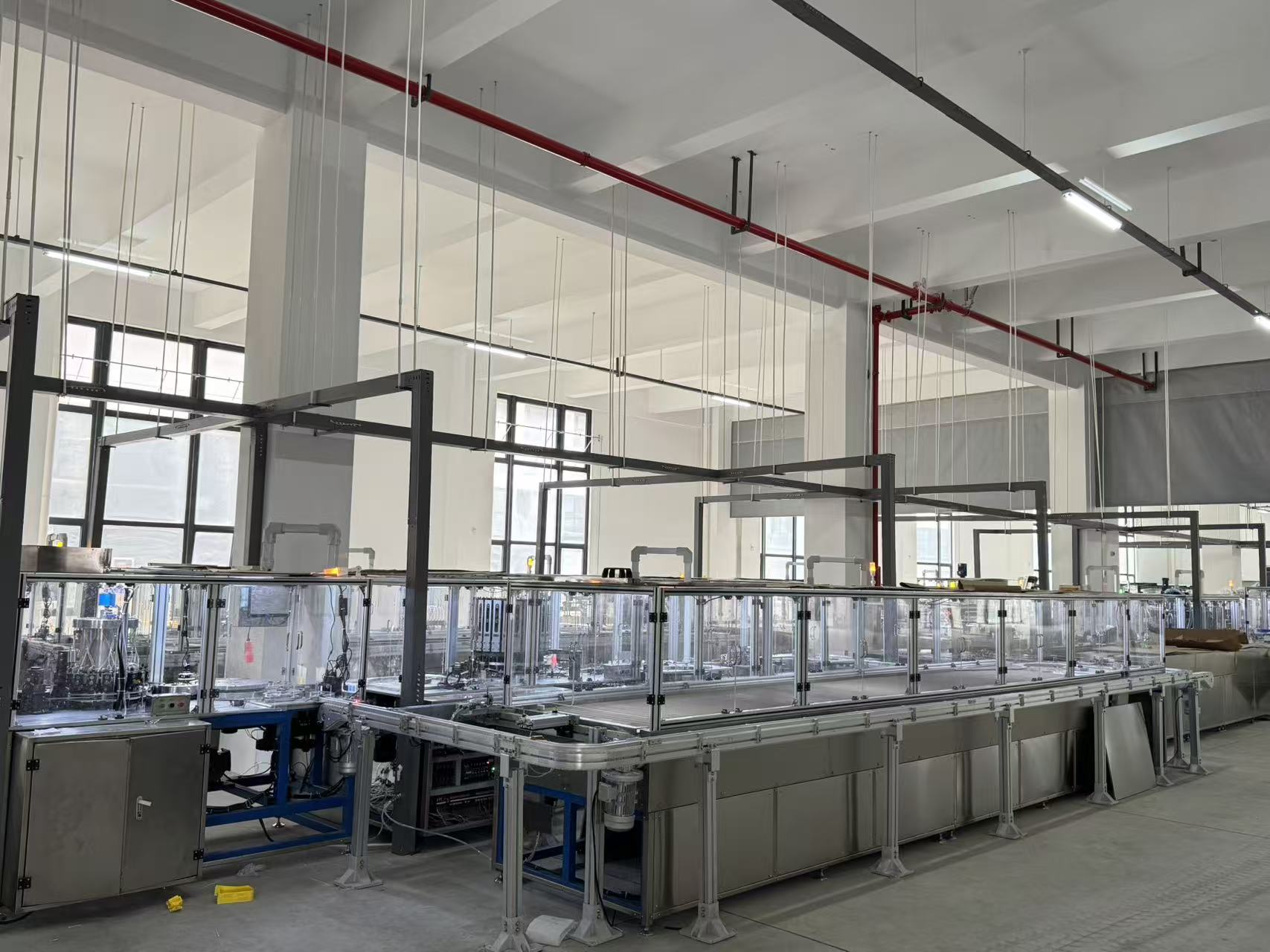
The manufacturing process for cell assembly is where the design comes to life. I oversee a highly efficient operation. My facility boasts 10 automatic production lines. Over 150 highly skilled employees work on these lines. This automation ensures precision and consistency in every battery cell. I prioritize a streamlined assembly process. This minimizes human error and maximizes output. Each component, from the electrodes to the separators, is carefully integrated. This creates a robust and reliable battery cell.
Quality Assurance and Testing Protocols for Custom Alkaline Batteries
Quality assurance is paramount in my production workflow. I implement rigorous testing protocols at every stage. My facility operates under the ISO9001 quality system. This ensures consistent quality and adherence to international standards. I conduct various tests to verify performance, safety, and durability. These tests include:
- Capacity testing
- Discharge rate testing
- Leakage tests
- Environmental stress tests
My products are SGS certified. This provides independent verification of their quality and compliance. I am committed to delivering products that not only meet but exceed client expectations.
Sample Delivery and Client Approval for Custom Alkaline Batteries
Once the initial production is complete, I move to sample delivery and client approval. This is a critical validation step. The customer reviews and approves proof drawings. This typically takes 3 to 5 days. If edits are needed, I revise the proof and resubmit it for approval. After proof approval, the lead time for producing samples is typically 10 weeks.
A significant advantage for alkaline batteries is their simplified development timeline. They do not require regulatory testing or certification for transportation, specifically omitting the UN38.3 step. This streamlines the process compared to some other battery types. The customer then reviews and tests the samples. This phase can range from 1 day to several months. It depends on the complexity of testing required, from quick bench-level tests to extensive in-device testing. I ensure open communication throughout this phase. This guarantees the final product perfectly matches the client’s vision.
Mass Production and Final Shipment of Custom Alkaline Batteries
Upon client approval of the samples, I initiate mass production. My manufacturing capabilities allow for efficient scaling. I leverage my 20 million USD assets and 20,000-square-meter manufacturing floor to meet large-scale demands. I also consider logistics for battery pack development, prototypes, transportation testing, certifications, and production. My internal design, development, and testing capabilities help manage costs and lead times effectively. This is more efficient than outsourcing key steps.
Unlike lithium batteries, alkaline batteries do not require specific certifications for shipment. This makes their logistics less stringent. I ensure all products are packaged securely and shipped efficiently. My professional sales team is ready to serve clients worldwide. I provide consultant service and the most competitive battery solutions. I also offer private label service. Choosing Johnson New Eletek as your battery partner means choosing reasonable cost and considerate service.
Key Considerations for Your Custom Alkaline Batteries Project
I find several factors crucial when planning a custom battery project. Understanding these elements from the start ensures a smooth and successful outcome.
Cost Implications and Budgeting for Custom Alkaline Batteries
I always advise clients to consider the full cost picture. Raw material availability significantly influences expenses. For example, the scarcity of zinc and manganese dioxide can drive up costs. My team also considers battery chemistry selection. Nickel-based chemistries are often more cost-effective than lithium. However, they offer lower energy density. The battery’s weight, size, and cell count also impact the budget. More cells might reduce material costs but increase shipping and redesign expenses. Enclosure design and potting choices, like metal or plastic, further affect manufacturing costs. Smart battery features, such as monitoring, also raise design costs due to added complexity.
Lead Times and Project Scheduling for Custom Alkaline Batteries
Project timelines are essential for planning. I typically see design and basic prototypes completed within 15 working days. Production tooling fixtures usually take 4 to 6 weeks. After design finalization, production lead time is generally 20 to 25 working days. Specialty potting materials might add extra time. Unlike some other battery types, Custom Alkaline Batteries do not require extensive UN38.3 testing for transportation. This often streamlines the overall schedule.
Scalability for Future Needs of Custom Alkaline Batteries
I always plan for future growth. Modular expansion allows gradual capacity increases. This reduces initial investment risk. Production lines need flexibility to adapt to changing market demands. My facility uses modular designs with interchangeable components. This allows reconfiguration for different battery types without major downtime. Quick Changeover (SMED) capabilities reduce changeover time between product variants. This improves overall equipment effectiveness. For high volumes, an OEM partnership leverages existing automatic production lines. For lower volumes or flexibility, an ODM model offers an agile solution.
Regulatory Compliance and Certifications for Custom Alkaline Batteries
Regulatory compliance is non-negotiable. My products meet EU/ROHS/REACH Directives. They are free from Mercury and Cadmium. CE Marking is vital for exports to Europe. It signifies conformity to health, safety, and environmental standards. My facility operates under the ISO9001 quality system. This ensures consistent quality. ISO 14001 addresses environmental management. IEC 62133 focuses on safety requirements for portable secondary cells. UL and FCC certifications are also important for global market access and device compatibility.
Partnering for Seamless Custom Alkaline Batteries Production
Johnson New Eletek’s Manufacturing Capabilities
I lead Ningbo Johnson New Eletek Co., Ltd., a professional manufacturer of various batteries. We operate with 20 million USD in assets and a 20,000-square-meter manufacturing floor. Over 150 highly skilled employees work on 10 automatic production lines. We adhere to the ISO9001 quality system and BSCI standards. My product range includes alkaline batteries, carbon-zinc batteries, Ni-MH batteries, button cells, and rechargeable batteries. I ensure we supply quality products at competitive costs.
Quality Assurance and Environmental Responsibility
Quality assurance is a core principle for me. My facility operates under the ISO9001 quality system. This ensures consistent product quality. My products are SGS certified. I take responsibility for protecting our environment and society. Our products are free from Mercury and Cadmium. They completely meet EU/ROHS/REACH Directives. Regarding disposal, most areas classify alkaline batteries as domestic trash. California, however, considers all battery chemistries, including alkaline, as toxic waste. Europe views alkaline batteries as non-hazardous waste. I recommend careful disposal, especially away from children or pets.
Expert Consultation and Competitive Solutions
I offer expert consultation for your custom battery projects. My professional sales team serves clients worldwide. We provide consultant service and the most competitive battery solutions. Engaging with my experts gives you access to extensive knowledge and experience. We assist from initial design through development to volume production. We recommend appropriate battery technology and charger solutions quickly and efficiently. We offer impartial, detailed advice on technical and commercial aspects. This includes direct access to our engineering and development resources. We also provide private label service. Choosing Johnson New Eletek for your Custom Alkaline Batteries means you choose reasonable cost and considerate service.
I simplify custom alkaline battery production, delivering immense value through a well-managed workflow. Tailored power solutions offer precise benefits, optimizing performance across diverse applications. I encourage you to explore custom options for your unique needs.
Contact me for expert assistance and a seamless partnership.
FAQ
What makes custom alkaline batteries unique?
I design custom alkaline batteries for your specific application. This optimizes performance, size, and lifespan. Standard batteries offer general solutions.
How long does the custom battery production process take?
The timeline varies. I complete design and prototypes within weeks. Production lead time is typically 20 to 25 working days after your approval.
Are custom alkaline batteries environmentally responsible?
Yes, I ensure our products are Mercury and Cadmium-free. They meet EU/ROHS/REACH Directives. We prioritize environmental responsibility in all our processes.
Post time: Jan-22-2026


