
Custom Battery Manufacturing and Export Solutions for
B2B Buyers
For B2B battery buyers in the United States and European countries, purchasing batteries is not only about finding a product with the right voltage and size. It is also about managing supply stability, product quality, packaging accuracy, compliance documents, shipment timing, and long term cooperation risk. This is why custom battery manufacturing has become an important sourcing strategy for importers, distributors, wholesalers, retail chains, private label buyers, OEM customers, and professional procurement teams.
As a battery manufacturer based in Yuyao, Ningbo, China, Ningbo Johnson New Eletek Co., Ltd focuses on primary batteries and selected rechargeable battery solutions for overseas markets. Our product range covers alkaline batteries, carbon zinc batteries, button cells, lithium coin cells, cylindrical lithium batteries, Ni MH batteries, Ni Cd batteries, and 1.5V Type C rechargeable batteries.
This article explains how B2B buyers can evaluate a battery manufacturing partner, reduce sourcing risk, and build a more reliable battery supply program for retail, wholesale, e commerce, industrial, hardware, and private label channels.
Key Takeaways
- Custom battery manufacturing helps buyers match battery type, packaging format, brand positioning, and export requirements to the target market.
- A reliable battery supplier should support product selection, sample testing, packaging confirmation, compliance review, production control, and shipment coordination.
- Quality control should cover raw materials, production process inspection, leakage control, discharge performance, finished product inspection, packaging inspection, and batch consistency.
- For American and European markets, buyers should verify applicable documents such as REACH, RoHS, CE, IEC 60086, EU 2023 1542 related requirements, and transportation documents when relevant.
- OEM and ODM cooperation is not only logo printing. It also includes packaging structure, retail display logic, carton information, barcode position, warning text, and buyer side documentation.
- Long term battery procurement should focus on stable batch performance, realistic lead time, after sales process, and clear communication between the buyer and manufacturer.
- Working with a professional battery manufacturer can help buyers improve procurement efficiency and reduce hidden risks in private label or wholesale battery programs.
Why Custom Battery Manufacturing Matters for B2B Buyers
Battery procurement is different from many ordinary consumer goods because product problems may appear after shipment, storage, retail display, or end user use. For example, a buyer may receive batteries that look acceptable at the sample stage, but later find inconsistent discharge performance, packaging color differences, leakage complaints, or missing compliance information during market entry.
Custom battery manufacturing helps solve these issues by connecting product design, technical specification, packaging, quality inspection, and export support into one controlled process. For B2B buyers, the value is not only customization. The deeper value is risk control.
A professional procurement manager usually needs to answer several questions before placing a bulk order:
- Can the product match the target application and price level?
- Can the packaging fit the sales channel?
- Can the supplier maintain consistency from sample to mass production?
- Can the supplier provide the documents required by the target market?
- Can the supplier support repeat orders with stable quality?
- Can the supplier communicate clearly when specifications, artwork, packaging, or delivery plans change?
When these questions are handled early, buyers can avoid many problems that often appear after mass production.
Understanding the Buyer’s Real Battery Requirements
A good battery project should begin with market and application analysis, not only with price negotiation. Different channels require different product choices.
A supermarket private label buyer may care about shelf ready packaging, clean barcode placement, warning labels, and stable appearance across multiple batches. A distributor may care more about bulk cartons, competitive assortment planning, and fast repeat order capability. A hardware chain buyer may require strong packaging protection, clear product identification, and dependable stock availability. An OEM customer may focus on device compatibility, discharge curve, safety information, and technical documents.
For this reason, we usually recommend buyers define the project from four angles.
Product Type
The first step is selecting the right battery chemistry and model. Common options include LR03 AAA alkaline batteries, LR6 AA alkaline batteries, LR14 C batteries, LR20 D batteries, 6LR61 9V batteries, R03 and R6 carbon zinc batteries, AG series button cells, CR series lithium coin cells, 18650 lithium cells, Ni MH batteries, Ni Cd batteries, and 1.5V Type C rechargeable batteries.
Alkaline batteries are commonly used for higher value retail battery programs because they offer stronger performance than carbon zinc batteries in many household devices. Carbon zinc batteries may still be suitable for price sensitive applications and certain low drain devices. Lithium coin cells are widely used in small electronic products, remote controls, meters, medical related devices, and backup power applications, depending on the product design.
Target Market
United States and European markets may have different requirements for packaging claims, warning information, environmental markings, and compliance documents. Buyers should confirm local rules before finalizing artwork and mass production.
For European sales, buyers often need to review battery regulation requirements, chemical compliance, packaging information, and recycling related markings. For the United States, buyers may need to check retail labeling, safety warnings, transportation requirements, and buyer specific compliance documents.
Sales Channel
Retail channels usually require attractive and consistent packaging. Wholesale channels may prefer efficient carton packing and clear product identification. E commerce channels may need stronger packaging protection and accurate product descriptions. Industrial buyers may focus on technical reliability and batch traceability.
A battery package that works for a local hardware store may not be suitable for a supermarket chain. A bulk carton designed for wholesalers may not satisfy a private label retail buyer. This is why packaging should be planned together with the sales channel.
Brand Positioning
Private label battery buyers need to decide whether the product should compete as an entry level, standard, or premium line. This decision affects battery chemistry, packaging material, visual design, claims, testing scope, and price structure.
Kenstar can be used as a reference for structured battery supply and retail packaging discussions. For private label customers, we can also support customized brand packaging according to confirmed artwork, technical specifications, and target market requirements.
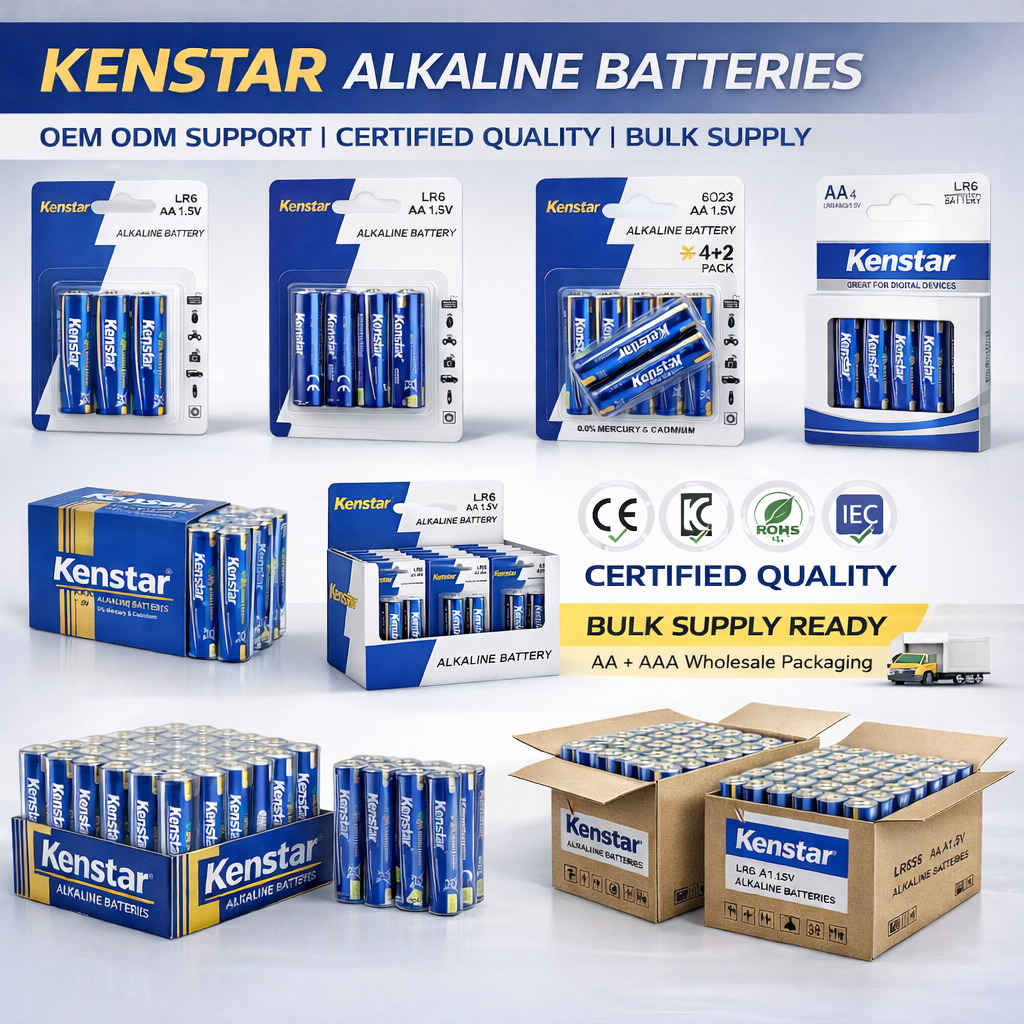
OEM and ODM Battery Solutions Beyond Logo Printing
Many buyers think OEM battery cooperation means printing a buyer’s brand name on the battery jacket or packaging card. In reality, professional OEM and ODM battery solutions involve a much wider process.
For retail battery programs, customization may include battery jacket design, blister card design, shrink pack structure, display box, PDQ tray, outer carton layout, product barcode, warning text, language versions, shelf display style, and carton shipping marks.
For distributors and importers, customization may include bulk packaging, mixed model assortment, private label cartons, pallet planning, and product specification sheets. For OEM customers, customization may involve product matching, discharge performance confirmation, technical file preparation, and packaging according to the device manufacturer’s requirements.
A practical OEM or ODM project should normally include these steps:
- Confirm target market, product type, application, and sales channel.
- Select suitable battery model and performance level.
- Confirm packaging format, quantity per pack, barcode, and carton structure.
- Review artwork, warning text, and compliance information.
- Arrange samples for buyer confirmation.
- Confirm mass production standard and inspection requirements.
- Control production, packaging, and shipment according to agreed specifications.
- Keep batch information for future repeat orders and quality tracking.
This process may look detailed, but it saves time later. When artwork, packaging structure, and technical requirements are unclear, delays and rework often happen before shipment.
Quality Control in Battery Manufacturing
Battery buyers should not evaluate a supplier only by catalog images or quotation sheets. For batteries, quality control is one of the most important parts of procurement.
A professional battery manufacturer should control quality before, during, and after production. This includes raw material inspection, production process checks, discharge performance testing, leakage control, appearance inspection, packaging inspection, and finished product confirmation.
At Ningbo Johnson New Eletek Co., Ltd, our quality control focus includes raw material control, production process inspection, finished product inspection, leakage control, discharge performance consistency, packaging inspection, and batch consistency control. These points are especially important for overseas buyers because product problems may create returns, customer complaints, shelf removal, or brand damage.
Key Quality Points Buyers Should Check
- Battery dimensions and weight consistency
- Open circuit voltage and discharge performance
- Leakage control and storage stability
- Appearance quality of battery jacket and terminals
- Packaging strength and sealing condition
- Barcode and label accuracy
- Carton marks and batch information
- Inspection records before shipment
- Sample standard compared with mass production standard
Battery quality should be discussed as a process, not as a simple promise. A reliable supplier should be able to explain how the product is inspected and how batch consistency is maintained.
Compliance and Export Documentation
Compliance is a major concern for American and European B2B buyers. Battery regulations and document requirements may vary depending on battery type, chemistry, application, destination country, sales channel, and customer requirements.
For primary batteries, buyers may need to verify applicable standards such as IEC 60086, RoHS, REACH, CE, and market specific requirements. For lithium batteries or lithium coin cells, transportation documents and safety related documents may also be required depending on the shipment method and product category. For European markets, buyers should pay attention to EU 2023 1542 related requirements and confirm what applies to their battery type and sales plan.
Ningbo Johnson New Eletek Co., Ltd may provide compliance and certification references such as BSCI, ISO 9001, ISO 14001, ISO 45001, EU 2023 1542, REACH, IEC 60086, RoHS, CE, KC, FSC, SGS, Intertek, and DEKRA related reports or references when applicable. Buyers should always verify the latest documents, product scope, validity, and target market suitability before using them for import, retail listing, or customer approval.
A responsible sourcing process should include document review before mass production. This is especially important when private label artwork includes compliance logos, recycling marks, warning information, or environmental claims.
Packaging Solutions for Retail, Wholesale, and Private Label Programs
Packaging is not only a visual design issue. For batteries, packaging affects shelf display, transportation protection, retail scanning, consumer understanding, and compliance communication.
Common packaging options include retail blister cards, shrink packs, bulk packaging, private label packaging, customized OEM packaging, display boxes, and PDQ display trays. The right choice depends on the buyer’s sales channel and market positioning.
Retail Packaging
Retail buyers usually need clean product display, strong visual identity, clear model information, barcode placement, warning text, and consistent pack quantity. Blister card packaging is common for AA, AAA, C, D, 9V, and button cell retail programs.
Bulk Packaging
Importers, wholesalers, and industrial buyers may prefer bulk packaging because it is efficient for storage, distribution, and large volume supply. Bulk packaging should still protect the batteries and keep batch information clear.
Private Label Packaging
Private label buyers need more than attractive artwork. They need packaging that supports brand positioning, shelf recognition, compliance communication, and repeat order consistency. Color, model name, quantity, claims, warning text, barcode, and carton marks should be reviewed carefully before production.
Export Carton and Shipment Planning
Export carton design should consider product weight, carton strength, palletization, shipping marks, and destination requirements. For batteries, cartons should be practical, clear, and suitable for long distance transportation.
Managing Supply Stability and Lead Time
Stable supply is one of the main reasons buyers choose to work directly with a manufacturer. A battery program may involve seasonal demand, retail promotion plans, warehouse replenishment, and repeat orders. If production planning is unstable, buyers may face stockouts, delayed deliveries, or urgent air freight costs.
A professional manufacturer should communicate realistic lead times based on product type, order quantity, packaging complexity, material availability, and production schedule. Buyers should also provide artwork, order forecast, and document requirements as early as possible.
For repeat orders, batch consistency becomes very important. The buyer should confirm whether the supplier can keep the same packaging material, color standard, carton layout, and product specification. Even small changes may create problems for retail buyers, especially when products are displayed side by side on shelves.
Practical Buyer Checklist
Product and Technical Confirmation
Confirm battery chemistry, model, voltage, size, capacity or discharge requirement, application, shelf life expectation, and storage condition. Ask whether the sample standard will be used as the mass production reference.
Supplier Capability
Check whether the supplier is a real manufacturer, what product range they support, whether they have automated production capability, and whether they can handle OEM or ODM cooperation.
Quality Control
Ask about raw material control, in process inspection, finished product inspection, leakage control, discharge testing, appearance inspection, packaging inspection, and batch tracking.
Packaging Confirmation
Confirm battery jacket artwork, retail card design, blister structure, shrink pack format, bulk carton, display box, barcode, warning text, language version, and shipping marks.
Compliance Review
Request the applicable compliance documents before mass production. Confirm product scope, validity, target market relevance, and whether the documents match the exact product type.
Sample Testing
Test samples under realistic conditions. For retail products, check both performance and packaging. For OEM projects, test the battery in the final device whenever possible.
Production and Delivery
Confirm lead time, production schedule, inspection plan, packing method, shipment method, and document requirements. Avoid changing artwork or packaging after mass production has started.
After Sales Process
Discuss how the supplier handles complaints, quality feedback, batch tracking, replacement, and corrective actions. A clear after sales process helps protect long term cooperation.
Trusted by Professional Buyers
For B2B battery buyers, supplier trust is built through stable cooperation, controlled production, clear communication, and repeatable quality. Ningbo Johnson New Eletek Co., Ltd has cooperation experience with multiple well known international and regional buyers across retail, industrial, automotive, hardware, tool, energy, and distribution related channels.
This experience does not mean every project is the same. Different buyers have different requirements for packaging, compliance, pricing, delivery, and documentation. Our role is to understand the buyer’s market and support a practical battery supply solution based on confirmed product and project requirements.
Why Work With a Professional Battery Manufacturer
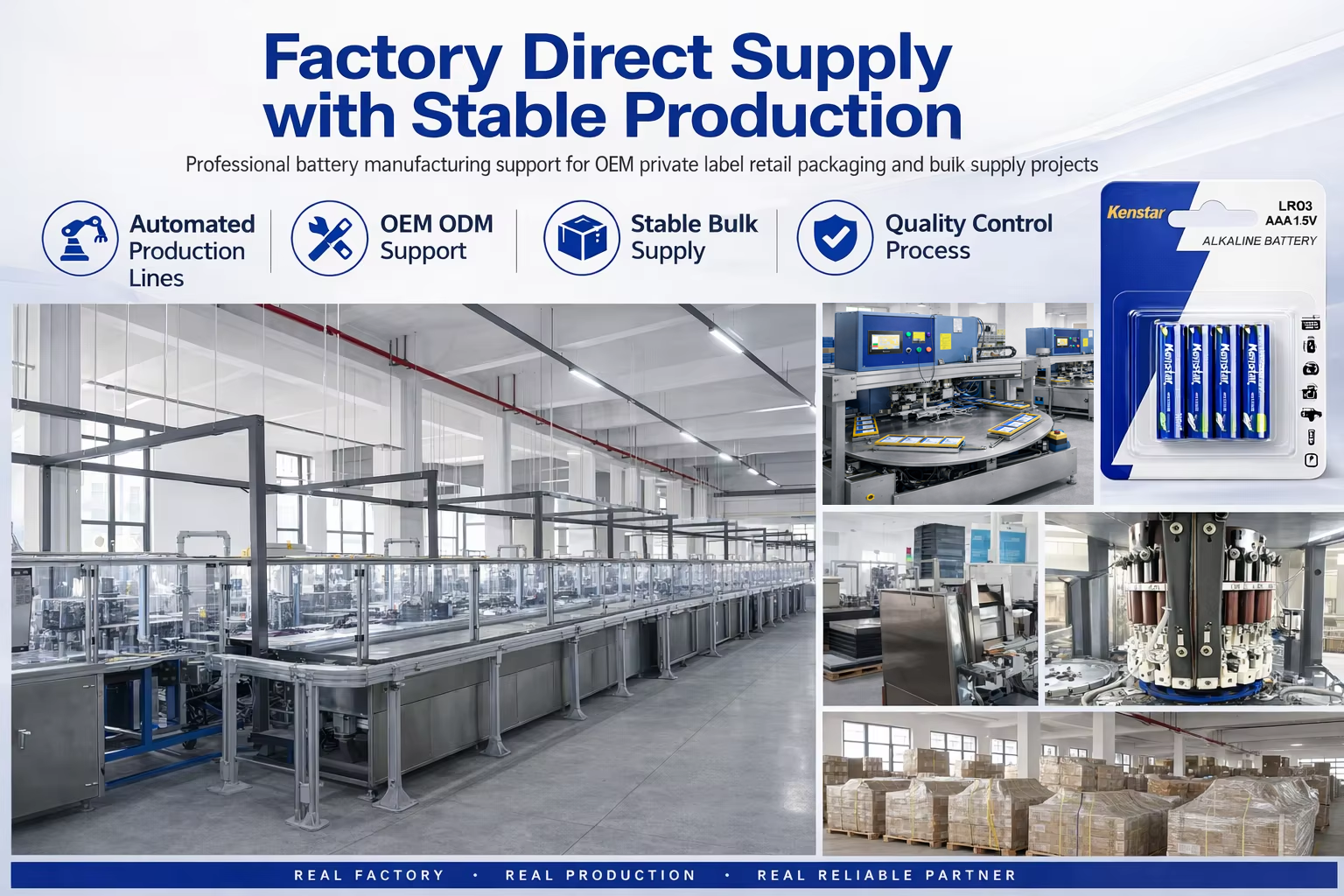
Working with a professional battery manufacturer gives buyers more control over product selection, packaging development, quality management, and export coordination.
Ningbo Johnson New Eletek Co., Ltd was founded in 2004 and is located in Yuyao, Ningbo, China. We operate around 10,000 square meters of workshop area and support automated production capability. Our product range includes LR03, LR6, LR14, LR20, 6LR61, R03, R6, R14, R20, 6F22, AG series button cells, CR series lithium coin cells, 18650 lithium cells, Ni MH, Ni Cd, and 1.5V Type C rechargeable batteries.
For overseas buyers, our value is not limited to product supply. We can support OEM and ODM battery solutions, retail packaging, bulk packaging, private label packaging, and customized export packaging when suitable. We also focus on communication during sample approval, artwork confirmation, production planning, quality inspection, and shipment preparation.
A professional manufacturer should not simply say yes to every request. In many cases, the supplier should help buyers identify practical risks, such as unsuitable packaging, unclear compliance claims, unrealistic delivery plans, or product choices that do not match the target application.
Conclusion
Custom battery manufacturing is a practical sourcing strategy for B2B buyers who need more than standard battery supply. It helps connect product selection, packaging design, quality control, compliance review, and export delivery into a more reliable procurement process.
For importers, distributors, wholesalers, private label buyers, retail chains, e commerce category managers, and OEM procurement teams, the right battery manufacturer can reduce hidden sourcing risks and improve long term supply efficiency.
If you are planning a battery program for the United States or European markets, you can contact our team at Ningbo Johnson New Eletek Co., Ltd to discuss suitable battery products, OEM or ODM packaging, compliance needs, and export solutions for your market.
FAQ
What is custom battery manufacturing for B2B buyers?
Custom battery manufacturing means developing or supplying battery products according to a buyer’s market, application, packaging, brand, compliance, and export requirements. It may include product selection, OEM packaging, private label design, sample testing, quality control, and shipment support.
How does custom battery manufacturing help private label battery buyers?
It helps private label buyers control product appearance, packaging format, barcode placement, warning text, carton marks, quality standard, and repeat order consistency. This is important for retail programs where brand image and shelf presentation must remain stable.
What battery types can be supplied for wholesale and OEM projects?
Common options include alkaline batteries, carbon zinc batteries, button cells, lithium coin cells, cylindrical lithium batteries, Ni MH batteries, Ni Cd batteries, and 1.5V Type C rechargeable batteries. The suitable choice depends on application, target market, price level, and compliance requirements.
What should buyers check before placing a bulk battery order?
Buyers should check product specifications, sample performance, packaging design, compliance documents, production lead time, quality inspection process, shipment method, and after sales handling. These checks help reduce risks before mass production.
Are compliance documents required for exporting batteries to Europe and the United States?
Compliance documents may be required depending on battery type, chemistry, destination country, sales channel, and customer requirements. Buyers should verify applicable documents such as REACH, RoHS, CE, IEC 60086, EU 2023 1542 related requirements, and transportation documents when relevant.
Can a battery manufacturer support retail ready packaging?
Yes. A professional battery manufacturer can support blister cards, shrink packs, display boxes, PDQ trays, bulk cartons, private label packaging, and customized OEM packaging. The final format should match the buyer’s sales channel and market positioning.
Why is batch consistency important in battery procurement?
Batch consistency helps ensure that product performance, appearance, packaging color, label information, and carton marks remain stable across repeat orders. This is especially important for retail buyers, distributors, and private label customers.
How should buyers choose a reliable battery manufacturer?
Buyers should evaluate manufacturing capability, product range, quality control process, compliance support, packaging ability, communication efficiency, delivery planning, and after sales response. A reliable supplier should provide clear information and help buyers manage procurement risks.
Post time: Jun-25-2026


