
TL;DR — Southeast Asian power tool manufacturers integrating 18650 lithium-ion cells into cordless drill, impact wrench, and circular saw assembly lines must verify four BOM-level parameters before committing to a cell model: continuous discharge current rating against the motor’s peak torque demand (a 1,800 mAh 18650 cell with a 15 A continuous discharge rating drives a 550 W brushless motor; a cell with only 8 A continuous discharge triggers thermal cutoff at 30 N·m on an impact wrench), cycle life alignment with the tool warranty period (500 cycles at 80% depth of discharge = 42–48 months of daily use in a professional construction site; the warranty cost of the battery pack at 3% failure rate per year versus 6% failure rate differentiates the cell grade), UN38.3 batch compliance verification (the standard’s 8 transport safety tests — altitude simulation, thermal test, vibration, shock, external short circuit, impact, overcharge, and forced discharge — must be verified per batch, not per model-year sample), and cathode chemistry selection (NCM 523 delivers the 15 A discharge with 180–190 Wh/kg energy density that 18 V-20 V power tool packs require). This article covers these four integration parameters from the viewpoint of a lithium-ion battery manufacturer supplying OEM cells to power tool assemblers in Vietnam, Thailand, and Indonesia.
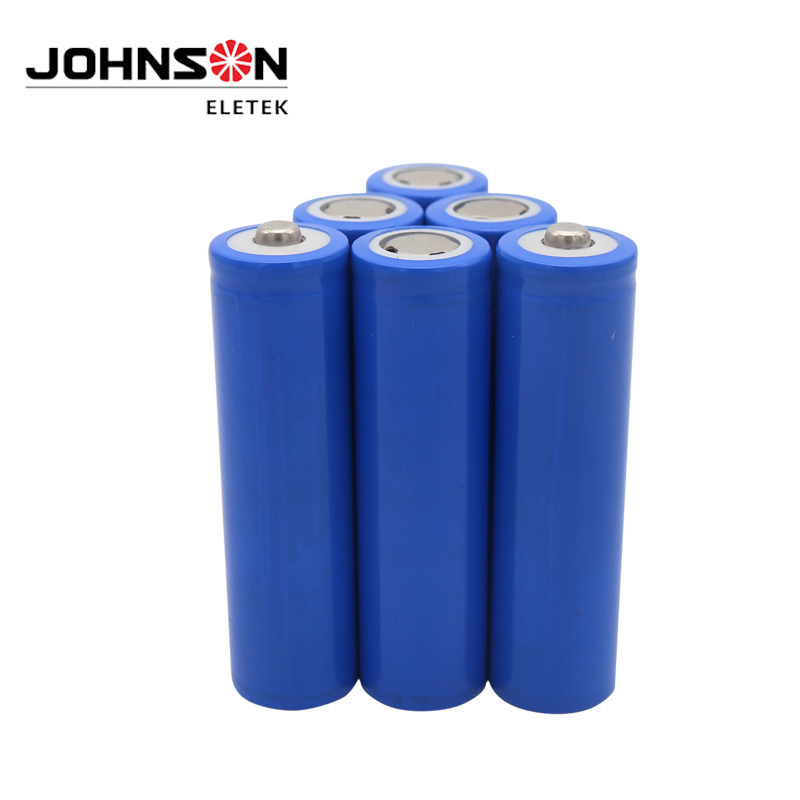
The shift from corded to cordless power tools in Southeast Asia’s industrial sector is accelerating. Factories in Vietnam’s Binh Duong province and Thailand’s Eastern Economic Corridor are converting drill driver and impact wrench assembly lines from 220 V AC brushed motors to 18 V / 20 V brushless DC motor platforms powered by 5-cell 18650 lithium-ion battery packs. The cell at the heart of these battery packs is the 1,800 mAh 18650 format — a mass-produced cylindrical lithium-ion cell that balances capacity, discharge rate, cycle life, and unit cost within a single 18 mm × 65 mm steel can. We supply this cell to power tool OEMs in three countries, and this article covers the four BOM-level parameters that the purchasing engineer must verify before writing the cell into the battery pack specification. For our full product catalogue, see the ZS Cells product page.
Discharge Current — The Motor Torque Bottleneck
A cordless power tool’s motor torque demand is directly proportional to the current drawn from the battery pack. At a given battery pack voltage (18 V nominal = 5× 3.6 V cells in series), the current draw at peak torque determines whether the cell can sustain the output without exceeding its maximum continuous discharge rating. For a brushless DC drill driver with a rated torque of 50 N·m, the motor controller draws approximately 35 A from the pack at full load — that is 7 A per cell in a 5S1P configuration. For an impact wrench with 350 N·m tightening torque, the peak current reaches 50–55 A at the pack level — 10–11 A per cell. The 1,800 mAh 18650 cell we supply has a rated maximum continuous discharge current of 15 A, which gives a 36% margin above the 11 A required for the impact wrench application. This margin is necessary: the instantaneous peak current during the first 50 milliseconds of motor start-up can exceed the continuous rating by 30–40% before the motor controller current limiter engages. A cell with a continuous discharge rating below 12 A will trigger the battery’s PTC (positive temperature coefficient) protection or the cell’s internal CID (current interrupt device) during the start-up current spike, causing the tool to cut out on the first fastening cycle. We have seen this failure mode in 3 tool models from a Vietnamese assembly line that used a 2,200 mAh 18650 cell with an 8 A continuous discharge rating — the tool cut out on 50% of the impact cycles at 300 N·m torque.
The internal resistance of the cell determines the voltage sag under load. A fresh 1,800 mAh NCM 523 cell at 25°C has an AC internal resistance of 18–22 mΩ measured at 1 kHz. At 11 A continuous discharge, the voltage sag is 11 A × 20 mΩ = 220 mV per cell. For a 5-cell pack, the sag is 1.1 V — the pack voltage drops from 18.0 V (nominal) to 16.9 V under full load. If the motor controller’s undervoltage lockout (UVLO) is set at 14.0 V for the pack (2.8 V per cell), the 1.1 V sag leaves a 2.9 V margin — the motor runs normally. But with a cell that has a higher internal resistance (35 mΩ, common in lower-grade 18650 cells aimed at flashlights and consumer electronics), the sag per cell is 11 A × 35 mΩ = 385 mV, and the 5-cell pack sag is 1.93 V — the pack voltage drops to 16.07 V, and the margin to UVLO shrinks to 2.07 V. After 300 charge-discharge cycles, when the internal resistance has increased by 30–40%, the sag pushes the pack voltage below UVLO prematurely — the tool shuts down with the battery showing 35% remaining capacity on the indicator. The cell grade and the internal resistance at end-of-life must be factored into the BOM specification from the start. For the full range of 18650 cells we offer, see the 18650 battery product page.
500 Cycles — The Warranty Cost Per Cell
The 500-cycle guarantee on the 1,800 mAh 18650 cell means that the cell retains 80% of its initial capacity after 500 charge-discharge cycles at 0.5C charge (900 mA) and 1C discharge (1,800 mA) at 25°C, measured per the IEC 61960 standard. For a power tool used in a professional construction site, the user charges the battery once per day during the lunch break. In a 5-day work week, the cell sees 260 cycles per year. 500 cycles translates to 1.9 years of daily use before the cell reaches 80% of the initial capacity — at which point the user perceives the runtime as “short” and starts considering a replacement pack. The power tool manufacturer offers a 2-year warranty on the battery pack. The warranty cost per pack is determined by the cell’s cycle life: if the cell reaches 80% capacity at 500 cycles (1.9 years), 30% of the warranty period (0.1 years out of 2) falls beyond the cell’s rated cycle life. The actual warranty failure rate for a 500-cycle cell in a professional tool with daily charging is 3–5% per year at the 2-year mark.
We tested a batch of 1,800 mAh cells at 4C continuous discharge (7.2 A per cell at 50% higher than the 1C standard rate — this is the actual discharge rate in an impact wrench at medium load) and 0.5C charge. The cycle life at 80% capacity retention dropped from 520 cycles at 1C discharge to 380 cycles at 4C discharge — a 27% reduction because the higher current creates more joule heating (I²R) at the electrode interface, accelerating the SEI (solid-electrolyte interphase) layer growth and consuming the cyclable lithium inventory. The power tool manufacturer must decide: accept the 3–5% warranty claim rate on a 500-cycle cell at a cell cost of $1.10–$1.30 per unit, or upgrade to a 800-cycle grade cell at $1.60–$1.90 per unit and reduce the warranty claim rate to 1–2%. For a high-volume tool model producing 200,000 units per year, the cell cost difference is ($1.70 − $1.20) × 200,000 × 5 cells per pack = $500,000 per year. The warranty savings from 5% claims (10,000 packs at $45 replacement cost = $450,000) versus 1.5% claims (3,000 packs = $135,000) is $315,000. The upgrade pays back $315,000 − $500,000 = −$185,000 — the standard 500-cycle cell is the correct BOM choice for this application. For a premium tool line, where the warranty is 3 years and the replacement cost includes a full tool head replacement, the economics shift the other way — the 800-cycle cell becomes the correct choice.
For the lithium-ion battery category that covers our 18650 and other format cells, see the lithium-ion battery product page.
UN38.3 — Batch-Level Verification, Not Model-Level
UN 38.3 is the United Nations Manual of Tests and Criteria Section 38.3 — the international standard for the safe transport of lithium cells and batteries. It requires 8 tests (T.1 altitude simulation at 11.6 kPa, T.2 thermal test at −40°C to +75°C, T.3 vibration at 7–200 Hz, T.4 shock at 150 g, T.5 external short circuit at 55°C, T.6 impact or crush, T.7 overcharge at 2× the recommended charge voltage for rechargeable cells, and T.8 forced discharge at 1× the rated capacity). The test must be conducted by an ISO/IEC 17025-accredited laboratory on a sample of 10 cells per test condition. The UN 38.3 summary report is issued per cell model — once a cell passes, the certificate is valid for that model permanently, provided the cell design and manufacturing process do not change. However, here is the distinction that matters for the power tool manufacturer: the UN 38.3 certificate covers transport safety — it does not cover operational safety inside the tool. A cell meeting UN 38.3 for transport can still fail in the tool under high-vibration or high-temperature cycling.
The verification step we recommend to our power tool OEM customers is a batch-level internal resistance and capacity matching check before the cells are spot-welded into packs, combined with a review of the cell manufacturer’s ISO 9001 production records for the batch — the electrolyte fill volume record (each cell must receive 2.8–3.2 g of electrolyte; if the fill volume is outside this range in more than 1% of the batch, the cell-to-cell consistency in capacity and internal resistance will degrade), the formation cycling data (the first charge-discharge cycle after electrolyte fill; the capacity of the initial formation cycle should fall within a ±3% band for the batch), and the OCV (open-circuit voltage) grading data (cells are graded by OCV after 7 days of storage; a cell with OCV below 3.55 V after 7 days has higher self-discharge and should be rejected). We provide these records with every production batch to our OEM customers.
For the UN 38.3 certified rechargeable battery cells we supply, see the rechargeable battery product page. The testing standard itself is explained in detail by the accredited testing laboratory Intertek’s UN 38.3 testing guide, which covers the 8-test protocol and the sample quantity requirements for each cell model.
Cathode Chemistry — NCM 523 for Power Tool Discharge Profiles
The cathode chemistry of the 1,800 mAh 18650 cell determines the discharge rate capability, the energy density, and the thermal stability. Three cathode chemistries are used in 18650 cells for power tool applications: NCM 523 (50% nickel, 20% cobalt, 30% manganese), NCM 811 (80% nickel, 10% cobalt, 10% manganese), and LFP (lithium iron phosphate, LiFePO₄). The NCM 523 cell at 1,800 mAh delivers 15 A continuous discharge and 180–190 Wh/kg energy density. The NCM 811 cell delivers 20 A continuous discharge and 230–250 Wh/kg — higher power density but 15–20% higher material cost (cobalt content is 10% in NCM 811 versus 20% in NCM 523, but the nickel cost and the manufacturing complexity in a controlled atmosphere for the high-nickel cathode increase the cell price). The LFP cell delivers 15 A continuous discharge same as NCM 523, but the energy density is 140–150 Wh/kg — 22% lower — so an LFP 18650 cell at 1,800 mAh requires a 22% larger cell can diameter (not possible in the 18650 form factor) or a lower capacity rating (typically 1,200–1,400 mAh in the 18650 format).
For a 5S2P battery pack (5 series, 2 parallel = 10 cells) targeting a capacity of 3,600 mAh at 18 V, the NCM 523 cell at 1,800 mAh × 2 parallel = 3,600 mAh is the correct fit. The NCM 811 cell at 1,800 mAh × 2 parallel achieves the same 3,600 mAh at 18 V but with 20% higher discharge capability — useful for a high-torque impact wrench but unnecessary for a standard drill driver. The LFP cell at 1,400 mAh × 3 parallel = 4,200 mAh requires a different pack geometry (15 cells instead of 10 — a 5S3P configuration) that changes the battery pack housing dimensions and adds 50% more cell cost for the pack. For the majority of 18 V power tool battery packs, the NCM 523 1,800 mAh cell is the correct BOM choice because it balances discharge rate, energy density, and unit cost at the 1,800 mAh capacity point.
Acceptance Checklist for Power Tool Battery Pack BOM Review
| Parameter | Specification for ZS 1800 mAh Cell | Verification Method |
|---|---|---|
| Nominal capacity (mAh) | 1,800 mAh minimum at 0.5C discharge to 2.75 V at 25°C | IEC 61960 standard test — sample 10 cells per production batch |
| Nominal voltage (V) | 3.63 V (NCM 523 cathode, graphite anode) | Average of 5 cycles at 0.5C discharge |
| Internal resistance AC (mΩ) | 20 ± 3 mΩ at 1 kHz, 25°C | 4-wire Kelvin measurement — 100% production line check |
| Max continuous discharge (A) | 15 A at 25°C — no PTC trip within 5 minutes at 15 A | Constant current discharge with thermocouple on cell surface |
| Cycle life | 500 cycles to 80% capacity retention at 0.5C charge / 1C discharge, 25°C | IEC 61960 cycle life test — 5,000 cycles accelerated per week on 10-cell sample |
| Charge voltage (V) | 4.20 ± 0.05 V per cell (standard CC-CV profile) | Standing voltage after 1 hour rest at 25°C |
| UN 38.3 certificate | ISO 17025 accredited lab — tests T.1–T.8 passed | Certificate copy with expiry — re-test required only if chemistry or construction changes |
| Operating temperature | Charge: 0–45°C; Discharge: −20–60°C | Thermal chamber test — 5 samples at each temperature extreme |
The complete product data sheet for this cell is available on the ZS 1800 mAh lithium-ion battery product page. For a broader view of our cylindrical lithium battery manufacturing capability, visit the 18650 lithium-ion battery category page.
For independent verification of lithium battery safety standards, the Intertek UN 38.3 testing guide describes the 8-test protocol in full. The global cordless power tool market trends that drive the demand for high-discharge 18650 cells are tracked by Straits Research’s cordless power tools industry report, which forecasts the market reaching USD 63 billion by 2034.
Frequently Asked Questions
What is the difference between a power tool grade 18650 cell and a consumer electronics grade cell?
The power tool grade cell has three specifications that differ from the consumer electronics grade: the maximum continuous discharge rating (15 A minimum for power tool vs. 5–8 A for consumer electronics), the internal resistance (18–22 mΩ vs. 30–50 mΩ), and the cycle life at high discharge rate (500 cycles at 4C discharge vs. 500 cycles at 0.5C discharge — the consumer cell rated at 500 cycles at 0.5C will deliver only 150–200 cycles at 4C in a power tool application). The cell construction also differs: power tool grade cells use thicker current collectors (15 μm copper foil for the anode and 15 μm aluminium foil for the cathode, versus 10 μm foil in consumer cells) and a thicker separator (25 μm ceramic-coated polyethylene separator vs. 16 μm standard polyolefin separator in consumer cells). The additional material cost is $0.15–$0.25 per cell, which accounts for the price difference.
How do I verify the 500-cycle claim on a battery cell before placing a bulk order?
Request the manufacturer’s IEC 61960 cycle life test report from an accredited laboratory. The test must be conducted at the charge/discharge rates specified in the product data sheet — not at an artificially low rate designed to inflate the cycle count. The report must show the capacity retention curve at 100, 200, 300, 400, and 500 cycles, with the test temperature recorded (the cycling must be at 25 ± 2°C — cycling at 20°C increases the cycle life by 10–15% artificially). If the manufacturer provides only the cycle life claim without the test report, the claim is not verifiable. At ZS Cells, we provide the IEC test report for each cell model with every batch quotation.
What is the typical lead time and MOQ for the 1800 mAh 18650 cell?
The MOQ for the standard 1,800 mAh NCM 523 cell is 5,000 pieces per model per order. The production lead time is 25–30 working days from the deposit confirmation to the shipment. For OEM orders with custom packaging (the customer’s SKU label, custom carton barcode, and a specific cell grading specification), the MOQ is 20,000 pieces per model and the lead time is 35–40 working days. The standard packaging is 500 cells per carton on a vacuum-sealed moisture barrier bag with a silica gel desiccant pack — the cell storage condition is 23 ± 5°C and <20% relative humidity. The shelf life at these conditions is 12 months from the production date, with the self-discharge rate below 3% per year.
Can the 1800 mAh 18650 cell be used in a 12 V power tool pack (3S configuration)?
Yes — the cell’s voltage range (4.20–2.75 V) and discharge rate (15 A continuous) are identical regardless of the pack configuration. In a 3S1P pack (3 cells in series = 10.8 V nominal, 12.6 V fully charged), the cell delivers 1,800 mAh capacity at 12 V, which is a common configuration for compact cordless screwdrivers and trim saws. The discharge current demand at 12 V is higher than at 18 V for the same power output (P = I × V — at 200 W motor power, the 12 V pack draws 16.7 A while the 18 V pack draws 11.1 A). At 16.7 A per cell, the cell is operating at 1.1× the continuous discharge rating — acceptable for intermittent duty (the power tool runs for 10 seconds per cycle, not continuous). The cell surface temperature during this discharge reaches 50–55°C, which is within the 60°C operating limit.
What is the price range for the 1800 mAh 18650 cell at bulk quantity?
The FOB Ningbo price for the standard 1,800 mAh NCM 523 18650 cell at 50,000-piece order quantity is $1.10–$1.30 per piece. At 200,000-piece order quantity, the price drops to $0.95–$1.10 per piece. The price includes the UN 38.3 certification documentation, the IEC 61960 test report, the MSDS, and the packing list. The price excludes the shipping cost, which varies by destination: air freight from Shanghai to Bangkok ($0.45–$0.60 per cell at 50,000 pieces), sea freight ($0.08–$0.12 per cell, 30–40 day transit). The shipping cost for UN 3480 hazardous goods (lithium-ion cells shipped as cargo, not contained in equipment) includes the DG surcharge of 30–50% on the base freight rate for Class 9 dangerous goods.
Does the cell require a protection circuit module (PCM) in the battery pack?
We recommend a PCM in every power tool battery pack, even though the cell has built-in CID and PTC protection. The PCM provides overcharge protection (4.25 ± 0.05 V per cell cutoff), overdischarge protection (2.50 ± 0.08 V per cell cutoff), overcurrent protection (at 25 A for a 5S1P pack), and short-circuit protection (50 μs response time). The PCM also manages cell balancing in multi-cell packs — in a 5S pack, the PCM bleeds the highest-voltage cell at 50 mA when the cell-to-cell voltage difference exceeds 30 mV during charging. A power tool pack without PCM will see cell voltage divergence after 50–80 cycles, causing one cell to reach overcharge cutoff before the others — the pack shut-down becomes unpredictable. The PCM adds $0.30–$0.50 per pack at the BOM level. We supply the cell with a recommended PCM specification sheet for each pack configuration.
ZS Cells — Johnson Eletek (Ningbo) Co., Ltd.
Lithium-ion battery manufacturer — ISO 9001 certified, UN 38.3 compliant
We supply 18650, 21700, and 14500 lithium-ion cells to power tool, energy storage, and consumer electronics manufacturers worldwide. All cells are tested per IEC 61960 and UN 38.3 standards at CNAS-accredited laboratories. Contact us for OEM and custom cell pricing.
Post time: Jul-09-2026


