

For most of the 2000s, 0% mercury alkaline was a premium feature that sat at the top of a buyer’s spec sheet, and the cell that met the spec carried a small price premium for the supply retool the chemistry required. That era is over. Between 2010 and 2020 the global alkaline supply base was retooled, the EU Battery Directive 2006/66/EC reached its binding 0.0005 percent mercury threshold, and the US Mercury-Containing and Rechargeable Battery Management Act of 1996 was fully enforced. The retooled supply base now ships 0% mercury cells as the default across consumer AA, AAA, C, D, and 9V sizes. Because the supply retool happened and the regulatory threshold held, the buyer’s spec sheet in 2026 treats 0% mercury as a baseline, not a feature — and a baseline is not where premium features live. This article walks through the era before 2010, the regulatory shift, the chemistry change, the LR03 AAA spec sheet, the honest caveats, and the supplier selection criteria in 2026, drawing on the supply observations from the ZSCELLS alkaline battery line and the global consumer-battery market.
Why 0% Mercury Alkaline Was Once a Premium Feature (2005-2010)
For most of the early 2000s, an alkaline battery was not a mercury-free cell by default. The mainstream consumer alkaline cell — the AA, AAA, C, D, and 9V cells that powered toys, remotes, flashlights, and the first generation of portable electronics — typically carried between 0.5 and 1.5 percent mercury by weight, added to the zinc powder anode as a corrosion inhibitor. The mercury additive extended shelf life, reduced gassing during storage, and gave the cell a stable discharge curve over a 5 to 7 year storage window. Without the mercury, the cell would gas, the seal would fail, and the cell would leak. The mercury was not an accident; the mercury was a working ingredient that the cell chemistry depended on. Because the mercury was a working ingredient, removing it was a chemistry problem, not a labelling problem, and the chemistry problem was the reason 0% mercury alkaline was a premium feature in 2005.
The 0% mercury alkaline cell that existed in 2005 was a real product, and it was a real achievement: a chemistry reformulation that used a higher-purity manganese dioxide, a corrosion-inhibited zinc powder, and a separator redesign to deliver the same 5 to 7 year storage window without the mercury additive. The cell existed in the major brand portfolios (Duracell, Energizer, Panasonic, and a handful of premium private-label lines), and the cell carried a 10 to 25 percent price premium over the mercury-additive mainstream cell. The premium was the cost of the supply retool, and the supply retool was voluntary on the brand side and pre-regulatory on the government side.
There was a second reason 0% mercury alkaline was a premium feature in 2005. The 0% mercury cell required tighter process control on the cathode, the separator, and the seal, and the tighter process control was a capital cost that the supply base had not yet absorbed. A buyer who specified 0% mercury in 2005 was specifying a cell from a brand with the capital to run the tighter process, and the brand used the specification to charge the premium. A buyer who did not specify 0% mercury in 2005 was buying the mainstream cell with the mercury additive, and the mainstream cell was the default because the supply base was not yet retooled.
That era is over. The voluntary premium era ended in 2010, and the regulatory era started in 2010, and the supply-shift era ran from 2010 to 2020. A buyer who writes 0% mercury on an alkaline cell spec sheet in 2026 is not specifying a premium feature; the buyer is specifying the supply default. The supply default is not where premium features live, and the price premium that used to attach to the 0% mercury cell has compressed to a small or zero premium for the standard consumer sizes. The premium is the wrong word for what 0% mercury means in 2026; the right word is the baseline.
What Regulations Pushed 0% Mercury to the Industry Default (2010-2020)?
Two regulatory frameworks are the binding drivers behind the global shift to 0% mercury alkaline: the EU Battery Directive 2006/66/EC, and the US Mercury-Containing and Rechargeable Battery Management Act of 1996 (the federal act that the EPA implements). The two frameworks are not the same regulation and they do not have the same threshold, but they converged on the same outcome: 0% mercury became the binding standard for consumer alkaline cells between 2010 and 2020. Because the two frameworks converged, a global supply base could retool once and sell the same cell to both markets, and that is the supply-side reason 0% mercury became the default.
The EU Battery Directive 2006/66/EC set a mercury limit of 0.0005 percent by weight for portable batteries, and the limit took effect in the destination market through the national transposition of the directive. The limit was binding for AA, AAA, C, D, and 9V alkaline cells, and the limit was binding for the button cells that were originally exempted. The button-cell exemption for cells below 1.5 percent mercury was phased out by the 2015 amendment to the directive, and the phase-out is the reason most AG and CR button cells in 2026 are also 0% mercury. For the US side, the EPA mercury programme is the right reference for the federal act, the state-level acts that extended the federal framework (notably New York, California, and Maine), and the destination-market framework that a US-bound shipment has to clear.
The convergence happened in three steps. The first step was the EU directive’s 0.0005 percent threshold, which the major brand portfolios cleared by 2008 to 2010 (the voluntary premium era’s last year). The second step was the US federal act’s full enforcement, which closed the US loophole for consumer alkaline cells. The third step was the supply retool, which is the operational consequence of the two regulatory frameworks. The supply retool moved the cell from a brand-by-brand voluntary SKU to a supply default by 2020, and the supply default is the era we are in now. Because the regulatory framework is now stable and the supply base has absorbed the retool, the buyer’s spec sheet does not need to negotiate the threshold; the threshold is already met on the mainstream cell.
| Era | Regulatory and supply state | Hg content (mainstream alkaline) | Buyer’s spec sheet |
|---|---|---|---|
| 2005 to 2010 | Voluntary premium era; EU directive 2006/66/EC published but not yet binding for portable cells; US act fully enforced but limited to button cells | 0.5 to 1.5 percent Hg by weight (mainstream); 0 percent Hg available as premium SKU | Specify 0% Hg to get the premium SKU; pay the 10 to 25 percent price premium |
| 2010 to 2015 | EU directive binding; US act fully enforced; supply base retooling in progress | 0.0005 percent Hg (EU max); 0 percent Hg becoming mainstream | 0% Hg is the working target; the supply is being retooled |
| 2015 to 2020 | EU directive amended to phase out button-cell exemption; US state acts extending federal framework; supply retool complete for AA, AAA, C, D, 9V | 0 percent Hg (default across consumer sizes); button cells close behind | 0% Hg is the default; the buyer specifies the default |
| 2020 to 2026 | EU directive fully enforced; US state acts stable; supply retool complete; AG and CR button cells in the same default | 0 percent Hg (default across the consumer line); detection limit below 1 ppm on the MSDS | 0% Hg is the baseline; the buyer verifies the baseline, not the premium |
The right way to read the table is to look at the buyer’s spec sheet column. In 2005 the buyer’s spec sheet was the place where the 0% mercury decision was made. In 2026 the buyer’s spec sheet is the place where the 0% mercury decision is verified. The decision moved from the buyer’s spec sheet to the supplier’s spec sheet, and the buyer’s spec sheet became the verification step rather than the design step.
How Did the Chemistry of a Mercury-Free Alkaline Cell Change?
The 0% mercury alkaline cell is not the same chemistry as the mercury-additive cell with the mercury removed. The 0% mercury cell is a reformulated chemistry that replaces the mercury additive with three coordinated changes: a higher-purity manganese dioxide cathode, a corrosion-inhibited zinc powder anode, and a redesigned separator. The three changes are not independent; the three changes have to land together for the cell to deliver the same 5 to 7 year storage window and the same discharge curve as the mercury-additive cell. Because the three changes are coordinated, the supply retool was a single project rather than three independent projects, and the supply retool is the reason the mainstream cell now ships at 0% mercury without a meaningful performance compromise.
The first change is the cathode. The mercury-additive cell used a manganese dioxide cathode with a typical purity of 70 to 80 percent, and the mercury additive on the zinc anode did the heavy lifting on gassing suppression. The 0% mercury cell uses a manganese dioxide cathode with a typical purity of 85 to 90 percent, and the higher purity does the gassing suppression on its own. The higher-purity cathode is more expensive, and the higher-purity cathode is the single biggest contributor to the supply retool cost. The right way to verify the higher-purity cathode is to look at the cell’s MSDS, where the manganese dioxide section reports the actual MnO2 percentage by weight. For the chemistry-side reference on manganese dioxide processing and the cell-manufacturing process control, the maintenance article published by Machinery Lubrication is a useful practitioner reference even though its primary subject is belt drives rather than battery chemistry.
The second change is the anode. The mercury-additive cell used a zinc powder anode with a 0.5 to 1.5 percent mercury additive, and the mercury did the corrosion inhibition. The 0% mercury cell uses a zinc powder anode with a bismuth or organic corrosion inhibitor, and the corrosion inhibitor does the corrosion inhibition on its own. The bismuth or organic corrosion inhibitor is the second-biggest contributor to the supply retool cost, and the corrosion inhibitor is the second-most-variable component across the global supply base. The right way to verify the corrosion inhibitor is to look at the cell’s MSDS, where the zinc and inhibitor section reports the inhibitor type and concentration.
The third change is the separator. The mercury-additive cell used a separator that was designed for the gassing profile of the mercury-additive cell, and the separator did not have to do the full job of ionic isolation between the anode and the cathode. The 0% mercury cell uses a separator that does the full job of ionic isolation, and the separator is the third-biggest contributor to the supply retool cost. The right way to verify the separator is to look at the cell’s published cycle-life and storage-life numbers, and the right way to interpret those numbers is in the context of the cell’s intended use (high-drain, low-drain, or mixed). A 0% mercury cell with the same cycle-life and storage-life numbers as the mercury-additive cell is a 0% mercury cell that has absorbed the retool; a 0% mercury cell with lower numbers is a cell that has skipped part of the retool.
The three changes together are what the supply retool absorbed between 2010 and 2020. The three changes together are also what the cell manufacturer has to keep stable, year after year, on every cell the brand ships. The cell manufacturer that absorbed the retool is the cell manufacturer that ships a 0% mercury cell with the same 5 to 7 year storage window and the same discharge curve as the mercury-additive cell. The cell manufacturer that did not absorb the retool is the cell manufacturer that ships a 0% mercury cell with a shorter storage window or a softer discharge curve, and the cell manufacturer that did not absorb the retool is the cell manufacturer the buyer’s QC team catches at the third-party test.
What Does 0% Mercury Mean for an LR03 AAA Buyer’s Spec Sheet?
The LR03 AAA is the right reference SKU for an alkaline battery spec sheet because LR03 AAA is the most-shipped consumer alkaline cell in the world. The spec sheet for an LR03 AAA 0% mercury cell has four fields, and the four fields are the fields a buyer’s QC team verifies on every receipt. Because the four fields are the same across AA, AAA, C, D, and 9V, the spec sheet that works for LR03 AAA works for the rest of the consumer line, and the four fields are the right place to standardise the buyer’s QC protocol.
- Field 1: IEC designation. The spec sheet should list the IEC designation LR03 for an AAA cell (LR6 for AA, LR14 for C, LR20 for D, 6LR61 for 9V). The L prefix indicates alkaline chemistry, and the absence of any H or Hg suffix in the IEC code is the first signal of a mercury-free cell. A spec sheet that does not list the IEC designation is a spec sheet that has not been reviewed against the international standard.
- Field 2: Label wording. The retail or industrial label should read 0% Hg or No Added Mercury or the equivalent in the destination market language. A label that does not mention mercury is a 50/50 signal; the label should explicitly state the mercury content, and the right way to interpret the label is that the absence of an explicit 0% Hg claim is a red flag, not a green flag. The label is the first place the buyer’s QC team looks, and the label is the first place the destination market’s compliance officer looks.
- Field 3: MSDS Hg section. The MSDS should report 0% mercury by weight, with the detection limit quoted (typically below 1 ppm or 0.0001 percent by weight). A non-zero number means the cell still contains mercury, and the buyer should ask the supplier for a current MSDS. The MSDS is the right place to verify the detection limit, because the detection limit is the right way to interpret the 0% mercury claim on a cell that has been independently tested.
- Field 4: Third-party test report (for high-value or first-article orders). For a high-value or first-article order, the spec sheet should reference a third-party test report for Hg content per IEC 60086-1 or the destination market standard. The third-party test is the right verification for a spec sheet that has to defend a destination-market compliance claim, and the third-party test is the right verification for a spec sheet that has to survive a buyer’s audit. The third-party test is not the right verification for every receipt, but the third-party test is the right verification for the first receipt and for the receipts that follow a supplier process change.
The four fields are the right starting point for a buyer’s alkaline battery spec sheet, and the four fields are the right place to defend the buyer’s compliance claim. The four fields are also the right place to defend the buyer’s brand, because a 0% mercury alkaline cell that the buyer has verified is a 0% mercury alkaline cell that the buyer’s downstream customer has not had to re-verify. For the IEC 60086-1 framework and the underlying dimensional and performance standards that the four fields reference, the ASTM standards catalogue is the right North American reference for the standard test methods and the tolerance bands.

What 0% Mercury Does Not Solve (the Honest Caveats)
Removing mercury from the alkaline cell solved the mercury problem. It did not solve the disposal problem, the recycling problem, the destination-market regulatory heterogeneity, or the button-cell legacy. A buyer’s spec sheet that writes 0% Hg is a buyer’s spec sheet that has solved one of the four problems; the other three problems sit downstream of the cell, and the other three problems are not solved by the cell’s chemistry. Because the cell’s chemistry is only one of the four problems, the buyer’s compliance program has to extend beyond the cell to the destination-market disposal and recycling regulations.
The first caveat is disposal. A 0% mercury alkaline cell is not a non-hazardous cell; the cell still contains zinc, manganese, and potassium hydroxide electrolyte, and the cell still has to be disposed of through a battery collection programme in most destination markets. The EU Battery Directive 2006/66/EC, the US Mercury-Containing and Rechargeable Battery Management Act, and the state-level acts that extend the federal framework all require battery collection, and the collection requirement applies to all alkaline cells, not just to mercury-additive cells. A buyer who writes 0% Hg on the spec sheet still has to write collection, transport, and recycling on the downstream compliance program. For the global PVC and battery industry context including end-of-life recycling targets and the supply chain for the recycled materials that go into the next generation of cells, the industry data published by VinylPlus is a useful cross-industry reference for the recycling infrastructure even though its primary subject is PVC rather than batteries.
The second caveat is destination-market regulatory heterogeneity. The EU directive and the US federal act converge on 0% mercury, but the destination markets that sit on top of those frameworks have additional layers. The EU member states have national transposition acts that vary in labelling, collection, and reporting requirements. The US states with extended battery acts (notably New York, California, Maine, and a dozen others) have their own labelling, collection, and reporting requirements. The destination markets outside the EU and the US (Latin America, Middle East, Africa, parts of Asia) have their own regulatory frameworks, and the frameworks are not always aligned. A buyer who writes 0% Hg on the spec sheet still has to write the destination-market compliance on the downstream compliance program, and the destination-market compliance is the right place to bring in a compliance specialist for the markets the buyer is shipping into.
The third caveat is the button-cell legacy. The EU directive’s button-cell exemption for cells below 1.5 percent mercury was phased out by the 2015 amendment, and the phase-out is the reason most AG and CR button cells in 2026 are also 0% mercury. The phase-out is not the same as a global ban; the phase-out is an EU requirement, and the destination markets outside the EU have their own button-cell regulations. A buyer who sources AG and CR button cells still has to verify the destination-market button-cell regulation, and the verification is not the same as the 0% Hg verification on the AA, AAA, C, D, and 9V cells. For the US side, the EPA mercury programme also covers button cells, and the right way to verify the button-cell compliance is the same four-field spec sheet as the consumer cell: IEC designation, label wording, MSDS Hg section, and third-party test report.
The three caveats are not reasons to drop the 0% Hg specification. The three caveats are reasons to expand the buyer’s compliance program beyond the cell chemistry. The cell chemistry is solved; the disposal, the regulatory heterogeneity, and the button-cell legacy are not solved. A buyer’s spec sheet that writes 0% Hg and does not write disposal, regulatory, and button-cell compliance is a spec sheet that has solved one of the four problems. A buyer’s spec sheet that writes all four is a spec sheet that has solved the right number of problems.
What to Look for in a 0% Mercury Alkaline Battery Supplier in 2026?
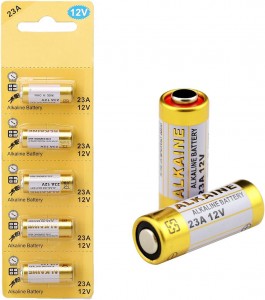
A 0% mercury alkaline battery supplier in 2026 is a supplier that has absorbed the 2010-2020 supply retool, ships the consumer line (AA, AAA, C, D, 9V, plus button cells and the 4LR25 and 12V lines) on the four-field spec sheet, and supports the destination-market compliance program with the right MSDS, label, and third-party test report. The supplier evaluation has five fields, and the five fields are the right place to compare suppliers. Because the 0% Hg alkaline cell is the supply default, the supplier evaluation is the place where the supply default is verified, not the place where the supply default is decided.
- Field 1: Reagent-grade manganese dioxide. The supplier should publish a manganese dioxide purity in the 85 to 90 percent range on the MSDS, with the detection limit quoted. A supplier that does not publish the MnO2 percentage is a supplier that has not absorbed the cathode change, and the cathode change is the single biggest contributor to the supply retool cost. For the cell-manufacturing tooling and the QC equipment that supports a 0% mercury alkaline line, the cross-industry reference for stocked laboratory and process equipment is the McMaster-Carr catalogue, which is a useful North American reference for the consumables and the QC hardware.
- Field 2: Bismuth or organic corrosion inhibitor on the anode. The supplier should publish the inhibitor type and concentration on the MSDS, and the supplier should publish a comparison between the inhibitor chemistry and the storage-life performance. A supplier that does not publish the inhibitor is a supplier that has not absorbed the anode change.
- Field 3: Storage life and cycle life on every cell in the consumer line. The supplier should publish a 5 to 7 year storage life and a published cycle life on the spec sheet for every cell in the consumer line. A supplier that publishes a 5 to 7 year storage life on AA but a 3 year storage life on 9V is a supplier that has not absorbed the supply retool across the line.
- Field 4: Destination-market compliance documentation. The supplier should provide an MSDS, a label draft, and a third-party test report for the destination market. The supplier should also provide the destination-market-specific labelling, collection, and reporting forms. A supplier that provides only an English MSDS is a supplier that has not built the destination-market compliance program.
- Field 5: ISO 9001 / ISO 14001 certification. The supplier should hold a current ISO 9001 (quality management) and ISO 14001 (environmental management) certification, with the certificate number and the issuing body published on the supplier’s website. A supplier that does not publish the certification is a supplier that has not built the cell-manufacturing quality system.
The five fields are the right starting point for a supplier evaluation, and the five fields are the right place to compare suppliers. The supplier that scores on all five is the supplier that has absorbed the supply retool and is shipping the 0% mercury alkaline cell as the supply default. The supplier that scores on three of the five is the supplier that has absorbed part of the retool and is shipping a 0% mercury cell that has not been fully verified. The supplier that scores on one or none of the five is the supplier that has not absorbed the retool, and the supplier that has not absorbed the retool is the supplier the buyer’s QC team catches at the third-party test. For an air-system and cleanroom-side reference on the manufacturing environment that a 0% mercury alkaline cell line requires, the Compressed Air Challenge programme is the right practitioner reference for North American cell manufacturers.
The right way to use the five fields is to put them on a single page, score each supplier on each field, and rank the suppliers by total score. The supplier that ranks at the top of the buyer’s supplier list is the supplier that has absorbed the 2010 to 2020 supply retool and is shipping a 0% mercury alkaline cell that the buyer’s QC team can verify on the four-field spec sheet. The supplier that ranks at the top of the buyer’s supplier list is also the supplier that the buyer’s downstream customer will not have to re-verify, and the no-re-verify outcome is the right commercial outcome for a 0% mercury alkaline cell in 2026.
Frequently Asked Questions
Is 0% mercury alkaline a premium feature in 2026?
No. 0% mercury alkaline is the supply default in 2026, not a premium feature. The global supply base was retooled between 2010 and 2020 to remove mercury additives from consumer AA, AAA, C, D, and 9V alkaline cells, and the EU Battery Directive 2006/66/EC plus the US Mercury-Containing and Rechargeable Battery Management Act of 1996 closed the regulatory loophole. A buyer’s spec sheet in 2026 treats 0% mercury as a baseline, not a feature.
What is the EU mercury limit for portable alkaline batteries?
The EU Battery Directive 2006/66/EC set a mercury limit of 0.0005 percent by weight for portable batteries, and the limit has been the binding standard since 2010. The 2015 amendment to the directive phased out the button-cell exemption for cells below 1.5 percent mercury, and the phase-out is the reason most AG and CR button cells in 2026 are also 0% mercury.
How is 0% mercury verified on an alkaline battery spec sheet?
Verify 0% mercury on a spec sheet with four fields: (1) the IEC designation should be LR6, LR03, LR14, LR20, or 6LR61 with no H or Hg suffix; (2) the label should read 0% Hg or No Added Mercury or the destination-market-language equivalent; (3) the MSDS Hg section should report 0% by weight with the detection limit quoted (typically below 1 ppm); and (4) a third-party test report per IEC 60086-1 should be referenced for a high-value or first-article order.
What chemistry change replaced the mercury additive in alkaline cells?
The mercury additive was replaced by three coordinated changes: a higher-purity manganese dioxide cathode (85 to 90 percent MnO2 vs the 70 to 80 percent of the mercury-additive cell), a zinc powder anode with a bismuth or organic corrosion inhibitor, and a redesigned separator. The three changes are coordinated rather than independent, and the supply retool was a single project rather than three independent projects.
Does 0% mercury alkaline affect battery storage life?
A 0% mercury alkaline cell from a supplier that has absorbed the 2010 to 2020 supply retool ships a 5 to 7 year storage window, the same as the mercury-additive cell. A 0% mercury cell with a shorter storage window is a cell that has skipped part of the retool, and the buyer’s QC team should catch the shorter storage window at the third-party test. The published storage-life number on the spec sheet is the right verification.
Are button cells (AG and CR) also 0% mercury?
Most AG and CR button cells in 2026 are 0% mercury, but the destination market matters. The EU Battery Directive 2006/66/EC phased out the button-cell exemption for cells below 1.5 percent mercury by the 2015 amendment, so the EU market requires 0% mercury. The US EPA mercury programme covers button cells, and the major button-cell categories in 2026 are 0% mercury. A buyer who sources AG and CR button cells still has to verify the destination-market button-cell regulation, and the verification is not the same as the 0% Hg verification on AA, AAA, C, D, and 9V cells.
Does 0% mercury mean the battery is non-hazardous?
No. A 0% mercury alkaline cell still contains zinc, manganese, and potassium hydroxide electrolyte, and the cell still has to be disposed of through a battery collection programme in most destination markets. The EU Battery Directive 2006/66/EC and the US Mercury-Containing and Rechargeable Battery Management Act both require battery collection, and the collection requirement applies to all alkaline cells, not just to mercury-additive cells. A buyer who writes 0% Hg on the spec sheet still has to write collection, transport, and recycling on the downstream compliance program.
What should a 2026 buyer’s alkaline battery spec sheet contain?
A 2026 buyer’s alkaline battery spec sheet should contain four cells per SKU: (1) the IEC designation with no Hg suffix; (2) the label wording 0% Hg or No Added Mercury in the destination market language; (3) the MSDS Hg section reporting 0% by weight with the detection limit quoted (typically below 1 ppm); and (4) a third-party test report per IEC 60086-1 for high-value or first-article orders. The four cells are the right starting point for the spec sheet, and the four cells are the right place to standardise the buyer’s QC protocol across the consumer line.
Post time: Oct-14-2026


