
TL;DR
Alkaline batteries have a 5-10 year nominal shelf life when stored at room temperature (20-25 degrees C) and moderate humidity (40-60% RH), but the effective shelf life is highly sensitive to the storage temperature and humidity. For wholesale distributors who hold alkaline battery inventory for 3-12 months before retail distribution, the storage conditions in the warehouse are the single largest factor affecting the warranty claim rate and the end-user satisfaction rate. This guide walks through the shelf life data, the temperature/humidity sensitivity, and the inventory planning practices that the Zhongsheng alkaline battery product line has been specified against since 2004.
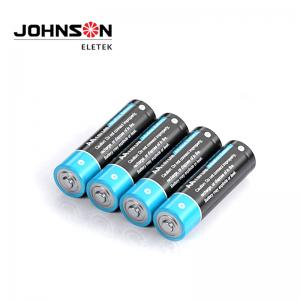
1. Why Storage Conditions Matter for Alkaline Battery Distributors
An alkaline battery distributor who orders a container load of AA or AAA batteries from a Chinese factory will typically hold the inventory in a warehouse for 3-12 months before the retail distribution cycle moves the units to end customers. During this warehouse storage period, the batteries are slowly losing capacity through self-discharge, and the rate of capacity loss is highly sensitive to the storage temperature and humidity.
Unlike rechargeable lithium-ion cells (which have a 30-40% capacity loss after 12 months of suboptimal storage), alkaline primary batteries have a much lower self-discharge rate at room temperature — typically 2-3% per year at 20-25 degrees C. This makes alkaline batteries the preferred chemistry for low-drain applications (remote controls, wall clocks, smoke detectors) where the battery must hold capacity for years without use. But the low self-discharge rate is conditional on proper storage conditions; alkaline batteries stored at high temperatures (above 30 degrees C) or high humidity (above 70% RH) will self-discharge much faster and may also develop seal failures that lead to leakage.
The wholesale distributor’s inventory planning must account for three variables: the storage temperature profile of the warehouse (which determines the annual capacity loss rate), the storage humidity profile (which determines the leakage risk), and the inventory holding period (which determines the cumulative capacity loss before the unit reaches the end user). All three variables are within the distributor’s control through warehouse selection, climate control investment, and inventory turnover management.
The Zhongsheng alkaline battery products are manufactured to the international standard IEC 60086, which specifies the dimensions, performance, safety, and labeling requirements for primary batteries. The IEC 60086 standard is adopted in Europe as EN 60086, in China as GB/T 8897, and in the United States as the ANSI C18 standards. Distributors selling into multiple regional markets should reference the IEC 60086 standard in the purchase order, because the regional adoption standards include specific amendments that may affect the battery performance or labeling requirements. The EU CE marking requirements for primary batteries apply to all alkaline battery products placed on the EU market, and the related compliance documentation (Declaration of Conformity, technical file, test reports) must be provided by the factory with each shipment.
2. The Shelf Life Data: What the Specifications Actually Mean
The Zhongsheng alkaline battery product specification calls for 5 years of shelf life at 25 degrees C storage with 80% capacity retention at the end of the 5-year period. The capacity retention figure is the key parameter — it means that after 5 years at the specified storage temperature, the battery will still deliver 80% of its original rated capacity when discharged under standard test conditions.
Standard test conditions: The capacity retention test is performed by storing the batteries at 25 degrees C and 60% RH (the standard storage conditions), then discharging the batteries through a standard load resistance at a constant current until the battery voltage drops below 0.9V (the cut-off voltage for a 1.5V alkaline cell). The discharge capacity at the 5-year point is compared against the original discharge capacity measured at the time of manufacture.
Capacity retention interpretation: A battery that delivers 80% of original capacity after 5 years is still functional in most applications. For low-drain applications (remote controls, wall clocks), the reduced capacity has minimal impact on user experience. For high-drain applications (digital cameras, high-power flashlights), the reduced capacity may be noticeable because the high current draw exposes the higher internal resistance of an aged battery.
Self-discharge rate at 25 degrees C: The self-discharge rate at 25 degrees C is approximately 2-3% per year. After 5 years, the cumulative self-discharge is approximately 10-15% of original capacity. The remaining capacity (85-90% of original) is above the 80% specification threshold. The specification is therefore conservative and provides a safety margin for the end user.
3. Temperature Sensitivity: The Storage Temperature vs Capacity Loss Curve
The capacity loss rate of alkaline batteries is approximately exponential with storage temperature. The rule of thumb is that the capacity loss rate doubles for every 10 degrees C increase in storage temperature. The table below summarizes the capacity loss rate at common storage temperatures.
10-15 degrees C (cold warehouse, temperate climate winter): Approximately 1% capacity loss per year. A battery stored at this temperature for 10 years would retain approximately 90% of original capacity — the longest practical shelf life.
20-25 degrees C (standard warehouse, room temperature): Approximately 2-3% capacity loss per year. The Zhongsheng 5-year specification is anchored at this temperature range.
30-35 degrees C (warm warehouse, subtropical climate summer): Approximately 5-8% capacity loss per year. A battery stored at this temperature for 5 years would retain approximately 60-75% of original capacity — below the 80% specification threshold.
40-45 degrees C (hot warehouse, tropical climate summer, non-air-conditioned warehouse in hot climate): Approximately 10-15% capacity loss per year. A battery stored at this temperature for 5 years would retain approximately 30-50% of original capacity — well below specification and likely to fail warranty.
The practical implication for distributors is that the warehouse location matters as much as the warehouse management. A distributor in northern Europe (warehouse average 15 degrees C) will see a 5-year shelf life close to the maximum, while a distributor in the Middle East (warehouse average 35 degrees C in summer) will see the 5-year shelf life reduced to approximately 3 years.
Arrhenius equation background: The exponential relationship between storage temperature and capacity loss rate is described by the Arrhenius equation, which is a fundamental principle of physical chemistry. For alkaline batteries, the activation energy of the self-discharge reaction is approximately 0.7-0.9 eV, which corresponds to a doubling of the reaction rate for every 10 degrees C temperature increase. The Arrhenius equation allows laboratory-accelerated aging tests (at elevated temperatures) to be used to predict the room-temperature shelf life, which is the standard testing methodology for alkaline battery shelf life specifications. The IEC 60086-2 standard for primary battery performance testing specifies the accelerated aging test protocol that all alkaline battery manufacturers use to generate the shelf life specifications.
4. Humidity Sensitivity: The Leakage Risk Curve
Alkaline battery seals are designed to prevent electrolyte leakage over the shelf life period, but the seal integrity is sensitive to humidity. The seal materials (typically nylon or polypropylene gaskets) absorb moisture over time, and high humidity accelerates the absorption. Once the gasket is saturated, the seal can fail and the battery can leak potassium hydroxide electrolyte.
The Zhongsheng factory storage specification calls for 60% RH maximum. The accelerated humidity test is performed at 60 degrees C and 90% RH for 30 days, which simulates approximately 2 years of storage at 25 degrees C and 60% RH. The battery specification requires no leakage after the accelerated test.
Optimal humidity (40-60% RH): The seal integrity is maintained over the full 5-year shelf life. No special warehouse equipment is needed beyond standard ventilation.
High humidity (60-80% RH, coastal climates, tropical rainy seasons): The seal integrity is degraded over time. Leakage may occur in 3-5% of units over a 5-year storage period, typically toward the end of the shelf life when the seal material is most degraded.
Very high humidity (above 80% RH, tropical coastal, direct rain exposure): The seal integrity is severely degraded. Leakage may occur in 10-20% of units within the first 1-2 years of storage. Warehouse climate control (dehumidification) is required for alkaline battery storage in these environments.
Leakage chemistry background: Alkaline battery leakage is caused by the potassium hydroxide electrolyte seeping past the seal gasket, typically as a result of seal degradation due to humidity exposure. The leaked electrolyte is corrosive to skin, eyes, and electronic device contacts. The IEC 60086-5 standard for primary battery safety specifies the leakage test protocol, and the UL 2054 standard for household and commercial batteries specifies the additional safety requirements for batteries used in household and commercial applications. Distributors selling into the North American market should specifically request UL 2054 compliance documentation.
5. Inventory Planning Practices for Alkaline Battery Distributors
Four inventory planning practices minimize the warranty claim rate and maximize the end-user satisfaction rate for alkaline battery distributors. The four practices are warehouse temperature management, warehouse humidity management, FIFO (first-in-first-out) rotation, and short-shelf-life-product segregation.
Practice 1 — Maintain warehouse temperature at 15-25 degrees C. A climate-controlled warehouse with a 15-25 degrees C ambient range is ideal for alkaline battery storage. In tropical climates, air conditioning for the storage area is a worthwhile investment; the air conditioning cost is typically much lower than the warranty cost savings from extended shelf life. Distributors should also avoid storing alkaline batteries near heat sources (boilers, ovens, direct sunlight through windows) which can create local hot spots in the storage area.
Practice 2 — Maintain warehouse humidity at 40-60% RH. A dehumidifier or air-conditioned storage area in humid climates keeps the humidity in the optimal range. In temperate climates, standard ventilation is usually sufficient. Distributors should avoid storing alkaline batteries in basements, unventilated shipping containers, or other locations where humidity can build up to 80% RH or higher.
Practice 3 — FIFO inventory rotation. Alkaline batteries that have been in the warehouse the longest should be shipped first. FIFO rotation prevents the oldest inventory from exceeding the shelf life specification while newer inventory sits in the warehouse. The Zhongsheng shipping cartons are marked with the manufacture date and the lot number, which makes FIFO tracking straightforward.
Practice 4 — Segregate short-shelf-life inventory. Alkaline batteries that have been in the warehouse for more than 3 years (in temperate climates) or more than 2 years (in tropical climates) should be segregated and shipped at a discount or to lower-end retail channels where the remaining capacity is acceptable. The segregated inventory should not be mixed with fresh inventory, because the older units may have already dropped below the 80% capacity threshold.
Extended Producer Responsibility (EPR) compliance: Distributors selling alkaline batteries into the EU market must comply with the EU Battery Regulation 2023/1542, which came into force in August 2023 and replaces the older Battery Directive 2006/66/EC. The new regulation introduces extended producer responsibility for battery waste collection and recycling, mandatory carbon footprint declarations for battery products, and stricter substance restrictions (including a lower threshold for mercury content). The compliance documentation is available on the EUR-Lex CELEX portal for the EU Battery Regulation 2023/1542. Distributors should work with the factory to ensure that the battery products meet the new regulation requirements before shipping to the EU market.
6. The Cost-Quality Trade-Off: Climate-Controlled vs Non-Climate-Controlled Warehousing
The cost difference between climate-controlled and non-climate-controlled warehousing is the most significant operational cost decision for an alkaline battery distributor. The trade-off depends on the warehouse location, the inventory holding period, and the warranty claim tolerance.
Temperate climate (15-25 degrees C average, 40-60% RH average): Climate control is not required for alkaline battery storage. The warehouse should be ventilated and protected from direct sunlight, but no air conditioning or dehumidification is needed. The operational cost is essentially zero beyond standard warehouse management.
Subtropical climate (25-30 degrees C average, 60-75% RH average): Climate control is recommended but not strictly required. Air conditioning for the storage area extends the effective shelf life by approximately 50%, which can be worth the investment for distributors holding inventory for 12+ months. The typical air conditioning cost is $0.50-$2 per square meter of storage area per month.
Tropical climate (30-35 degrees C average, 70-85% RH average): Climate control is required for alkaline battery storage. Air conditioning plus dehumidification is necessary to maintain the 25 degrees C and 60% RH specification. Without climate control, the effective shelf life is reduced to 2-3 years, which can lead to warranty claims within the first 12 months of distribution.
For a typical 10,000 square meter warehouse in a subtropical climate holding 100,000 units of alkaline batteries, the climate control cost is approximately $5,000-$20,000 per month. The warranty cost savings from extending the shelf life by 50% is approximately $15,000-$30,000 per year (assuming a 3-5% warranty claim rate at the longer shelf life vs 8-12% at the shorter shelf life). The cost-benefit calculation is favorable for climate control in this scenario.
Multi-product warehouse zoning: Many wholesale distributors store alkaline batteries alongside other consumer electronics products (remote controls, computer accessories, small appliances). The mixed storage creates two risks for alkaline batteries: (1) heat generated by other electronics can create local hot spots above 30 degrees C, and (2) the mixed storage makes FIFO rotation more complex because the battery inventory may be physically separated from related products. The best practice is to designate a specific zone of the warehouse for alkaline battery storage, with separate temperature monitoring and FIFO tracking. The zoning also reduces the contamination risk if a battery leaks — the leak can be contained to the battery zone rather than damaging other electronics.
Inventory turnover vs shelf life balance: For distributors with high inventory turnover (under 90 days from receiving to retail), the shelf life is rarely a limiting factor because the batteries reach the end user before significant capacity loss occurs. For distributors with low inventory turnover (6-12 months from receiving to retail), the shelf life becomes a critical planning parameter that affects both the warehouse management and the retail pricing strategy. The Zhongsheng factory recommends that distributors targeting 12-month inventory turnover order no more than 80% of their expected annual sales volume per shipment, leaving a 20% safety margin for unexpected demand spikes.
7. Real-World Field Failures: What Happens When Storage Practices Are Skipped
Three field failure cases from the Zhongsheng customer support records illustrate the cost of skipping the four inventory management practices. In each case, the failure was traced back to a specific storage management gap that could have been avoided with the recommended practice.
Case 1 — Office supply distributor, Saudi Arabia (2022 Q3): A Saudi Arabian office supply distributor ordered 50,000 units of AA LR6 alkaline batteries for distribution to retail and corporate office channels. The distributor stored the units in a non-climate-controlled warehouse in Riyadh, where the summer ambient temperature reaches 42-48 degrees C. After 6 months, the distributor received warranty claims from retailers showing that approximately 18% of units had lost more than 20% of original capacity. The distributor’s warranty cost was approximately $13,500 USD (18% × 50,000 × $1.50 wholesale unit cost). The distributor has since invested in air conditioning for the alkaline battery storage area, which reduced the warranty claim rate to under 2%.
Case 2 — Industrial OEM customer, Brazil (2023 Q2): A Brazilian industrial OEM customer ordered 20,000 units of AAA LR03 alkaline batteries for use in industrial sensor devices. The OEM customer stored the batteries in a coastal warehouse in Santos, where the average humidity is 78-82% RH year-round. After 8 months, approximately 6% of units developed leakage, which damaged 1,200 industrial sensor devices in the field. The OEM customer’s total cost (battery replacement + sensor repair + field service) was approximately $24,000 USD. The OEM has since specified that all alkaline battery suppliers must meet the IEC 60086-5 leakage standard and must ship with desiccant packs in the inner packaging.
Case 3 — Consumer electronics retailer, Indonesia (2024 Q1): An Indonesian consumer electronics retailer ordered 100,000 units of mixed AA/AAA alkaline batteries for distribution to consumer electronics retailers across the country. The retailer stored the batteries in a mixed warehouse with electronics products that generated heat (TVs, computers). The local hot spots in the warehouse reached 38-42 degrees C, even though the ambient warehouse temperature was 30 degrees C. After 4 months, approximately 12% of units showed accelerated self-discharge. The retailer’s warranty cost was approximately $18,000 USD. The retailer has since segregated the alkaline battery storage area from the electronics storage area and added local temperature monitoring.
The three cases above illustrate a consistent pattern: the cost of skipping proper storage practices is several times the cost savings from cutting corners on storage. The Saudi Arabia case shows the temperature sensitivity; the Brazil case shows the humidity sensitivity; the Indonesia case shows the local hot spot sensitivity within a generally acceptable warehouse. An importer who stores alkaline batteries in a climate-controlled warehouse at 20-25 degrees C and 40-60% RH will see a warranty claim rate of approximately 1-2%. An importer who stores the same batteries in a non-climate-controlled warehouse in a hot climate will see a warranty claim rate of 10-20%. The 10x difference in warranty cost is the difference between a profitable product line and an unprofitable one. The warehouse safety standards that apply to large alkaline battery storage operations are documented by the US Occupational Safety and Health Administration (OSHA) warehouse safety guidelines, which include specific recommendations for battery storage, fire prevention, and emergency response.
8. Frequently Asked Questions
Q: How long is the shelf life of an alkaline battery?
A: Alkaline batteries have a nominal shelf life of 5-10 years when stored at room temperature (20-25 degrees C) and moderate humidity (40-60% RH). The Zhongsheng alkaline battery products are specified for 5 years of shelf life under standard storage conditions, with capacity retention above 80% of the original rated capacity. Storage at higher temperatures or higher humidity will shorten the effective shelf life.
Q: What is the optimal temperature and humidity for alkaline battery storage?
A: The optimal storage conditions for alkaline batteries are 15-25 degrees C ambient temperature and 40-60% relative humidity. Storage above 30 degrees C accelerates self-discharge and capacity loss; storage above 60% RH increases the risk of seal degradation and leakage. The Zhongsheng factory storage specification is 25 degrees C and 60% RH maximum, with no direct sunlight exposure.
Q: How much capacity does an alkaline battery lose per year in storage?
A: Alkaline batteries stored at 20-25 degrees C lose approximately 2-3% of original capacity per year through self-discharge. At 30 degrees C, the loss rate increases to approximately 5-8% per year. At 40 degrees C, the loss rate is approximately 10-15% per year. The Zhongsheng product specification requires 80% capacity retention after 5 years at 25 degrees C storage, which is consistent with the 2-3% per year loss rate.
Q: Can wholesale distributors store alkaline batteries in a non-climate-controlled warehouse?
A: Alkaline batteries can be stored in a non-climate-controlled warehouse if the warehouse temperature stays within 10-30 degrees C and the humidity stays below 70% RH year-round. Warehouses in tropical climates (above 30 degrees C average) or coastal climates (above 70% RH average) require climate control for long-term alkaline battery storage. The capacity loss rate doubles for every 10 degrees C increase in storage temperature, so a warehouse at 35 degrees C average will see the 5-year shelf life reduced to approximately 3 years.
9. Internal Reference: How to Source Zhongsheng Alkaline Batteries
Internal links: Zhongsheng alkaline battery product line · Zhongsheng full battery product catalog · About Ningbo Zhongsheng Electronic Technology Co., Ltd.
Post time: Jul-23-2026


