
- ZA10, ZA13, and ZA312 all deliver 1.4V nominal voltage—the voltage is identical; the difference is capacity (mAh), available current, and physical dimensions
- Zinc air battery activation depends on atmospheric oxygen entering through the air hole after the plastic seal is removed; the battery is inert and shelf-stable until the seal is broken
- ZA312 is the highest-volume hearing aid battery globally, driven by the dominant BTE and RIC hearing aid form factor that requires moderate capacity in a compact cylindrical form factor
- Color coding is standardized across manufacturers: yellow (ZA10), orange (ZA13), brown (ZA312)—allowing audiologists and end users to identify size without measurement
- For hearing aid OEM procurement specification, the key variables are: IEC battery size code, nominal voltage, nominal capacity (mAh), maximum continuous drain current, and the battery’s physical dimensions matched to the hearing aid battery compartment
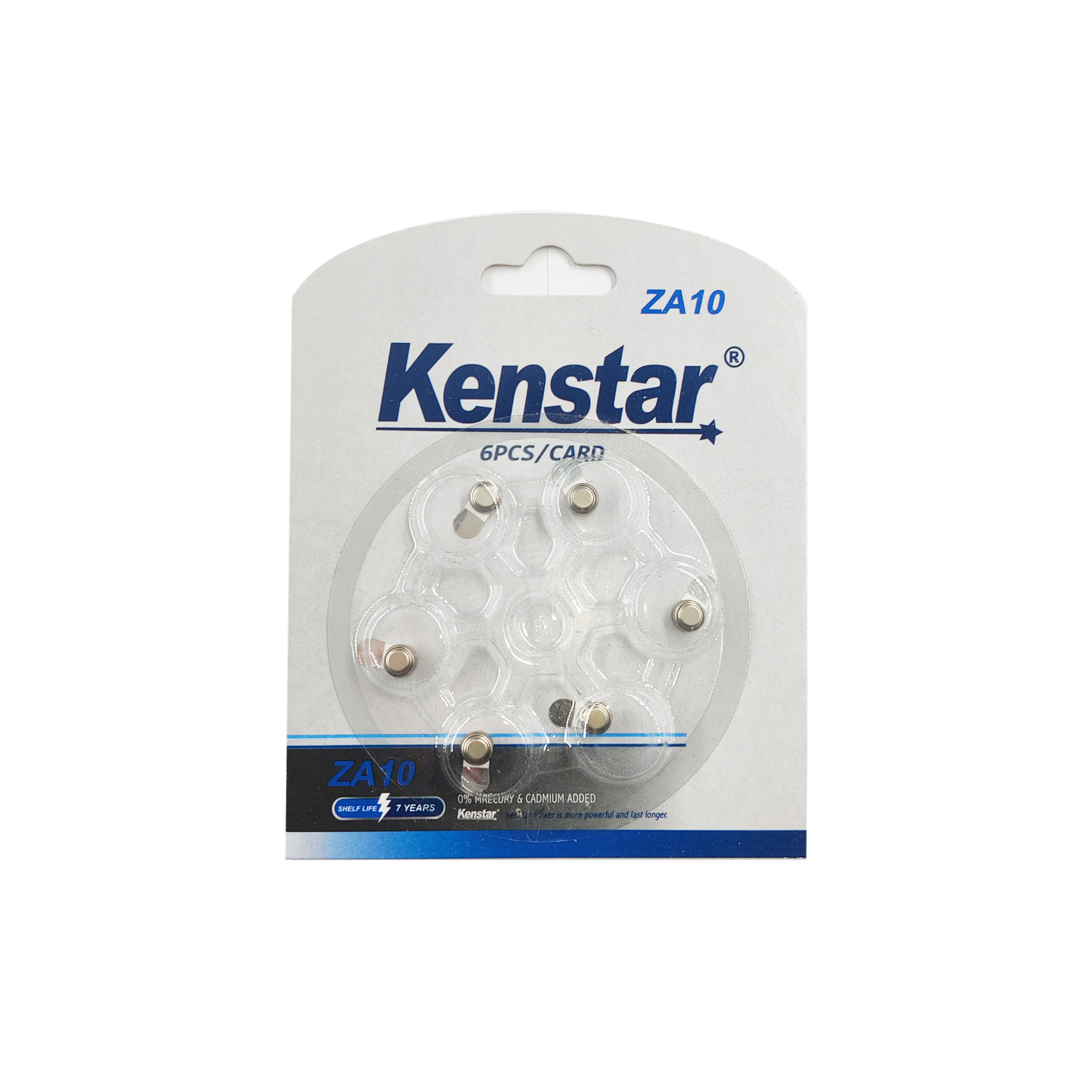
Why Zinc Air Dominates the Hearing Aid Battery Market
If you are specifying batteries for a hearing aid program, the chemistry choice is essentially settled: zinc air is the standard. No other commercially available battery chemistry delivers the combination of energy density, voltage stability, shelf life, and cost that zinc air provides at the form factors required for in-ear and behind-ear hearing aids. Understanding zinc air battery technology is therefore not an academic exercise—it is the foundation of a correct OEM specification.
The zinc air electrochemical cell works by using atmospheric oxygen as its cathode reactant. Oxygen enters through small air holes in the battery case and reacts with the zinc anode via an electrochemical reduction at the cathode surface. This cathode reaction produces a stable 1.4V nominal voltage with a very flat discharge curve—the voltage remains close to 1.4V for most of the discharge cycle before dropping toward the end-of-life threshold. For hearing aid applications, this flat voltage profile means the DSP processor, microphone preamp, and wireless transceiver all receive stable supply voltage, which directly affects sound quality and wireless connection stability.
The practical consequence of the oxygen-dependent chemistry is that zinc air batteries are activated by removing the seal tab, not by placing them in the hearing aid. Because no electrochemical reaction occurs until atmospheric oxygen reaches the cathode, so the sealed battery can sit in inventory for up to three years without meaningful self-discharge—significantly longer than alkaline or silver oxide cells of comparable size.
ZA10 Zinc Air Battery: Size, Capacity, and CIC/IIC Application Fit
The ZA10 zinc air battery is the smallest of the three standard hearing aid battery sizes, corresponding to IEC size PR536. Its defining characteristic is physical miniaturization—the ZA10 must fit inside the constrained battery compartment of completely-in-canal (CIC) and invisible-in-canal (IIC) hearing aids where the device is custom-molded to sit deep in the ear canal.
The trade-off for small size is reduced capacity. The ZA10′s zinc anode volume is the smallest of the three sizes, which limits the total electrochemical active material available for the reaction. This means the ZA10 has the shortest service life of the three sizes under equivalent drain conditions—a consideration that matters for end users who wear their CIC/IIC hearing aids full-time.
From a manufacturer’s specification perspective, the ZA10 is defined by IEC 60086-2 dimensional limits (5.8 mm maximum diameter, 3.6 mm height) and a nominal voltage of 1.4V. The critical OEM specification check is the battery compartment height tolerance in the custom CIC housing: even 0.1 mm of interference between the battery and the compartment wall can prevent reliable contact closure or make battery insertion difficult for the end user. Custom CIC manufacturers typically specify a battery compartment tolerance of ±0.05 mm on the ZA10 cell.
ZA13 Zinc Air Battery: The ITE Power Cell
The ZA13 (IEC size PR48) is the tallest of the three standard hearing aid battery sizes, with a maximum diameter of 7.9 mm matching the ZA312 but a height of 5.4 mm—significantly taller than the 3.6 mm ZA312. This extra height translates directly into more zinc anode volume and higher capacity compared to the ZA312 under the same drain conditions.
The ZA13 is the standard battery for in-the-ear (ITE) hearing aids, which are larger than CIC/IIC devices and sit in the concha or ear canal entrance rather than deep within the canal. ITE hearing aids have more internal space for a larger battery compartment and can accommodate the ZA13′s taller form factor. The additional capacity of the ZA13 relative to the ZA312 makes it the preferred cell for ITE devices with features like multiple program memories, telecoil inputs, and higher-gain audio amplification.
The orange tab color coding on ZA13 cells is consistent across all major manufacturers, making it easy for audiologists and end users to identify and replace the battery without consulting the device manual. For OEM procurement, specifying the ZA13 means specifying an orange-tab IEC PR48 cell with 1.4V nominal voltage and a capacity range appropriate for the target hearing aid’s daily drain profile.
ZA312 Zinc Air Battery: The Global Volume Leader
The ZA312 (IEC size PR41) is the most widely used hearing aid battery globally. It sits in the sweet spot of the hearing aid market: compact enough to fit behind-the-ear (BTE) and receiver-in-canal (RIC) hearing aid housings, yet delivering enough capacity to power the digital signal processing, multi-channel compression, and wireless connectivity features found in modern hearing aids.
From the first-party specifications available for ZSCells ZA312 cells: nominal voltage of 1.4V, nominal capacity of 180 mAh, and an available current specification of 20 mA measured at 1.1V. The available current specification is particularly important for ZA312 applications because modern BTE and RIC hearing aids frequently include Bluetooth audio streaming, which generates peak drain currents that a lower-current-rated battery would not sustain without voltage sag.
Key features of the ZA312 format, confirmed from first-party product data: flat discharge voltage profile providing consistent output throughout the service life; high drain output capability for heavy-duty hearing aids; sealed shelf life of up to three years; and the brown tab color code for universal identification. The ZA312 is also the most commonly stocked zinc air battery size in pharmacies and audiologist clinics worldwide, which makes it the most accessible replacement battery for end users—a relevant consideration for hearing aid manufacturers targeting the retail replacement market.
Because the ZA312 delivers 180 mAh at 1.4V in a 7.9 mm × 3.6 mm cylindrical form factor with 20 mA available current, so it can power both the steady-state DSP processing and the peak drain of Bluetooth audio streaming that characterizes modern BTE and RIC hearing aids without voltage sag during high-drain events.
ZA10 vs ZA13 vs ZA312: Head-to-Head Specification Comparison
The table below summarizes the key specification variables that matter for hearing aid OEM and procurement decision-making. Physical dimensions, electrical parameters, and application fit are all relevant—and the optimal choice depends on the specific hearing aid form factor and feature set being designed or sourced.
| Specification | ZA10 (PR536) | ZA13 (PR48) | ZA312 (PR41) |
|---|---|---|---|
| Nominal Voltage | 1.4V | 1.4V | 1.4V |
| Nominal Capacity (mAh) | Lower than ZA13/ZA312 | Higher than ZA10; lower than ZA312 in practice | 180 mAh (per ZSCells first-party data) |
| Available Current | Suitable for low-drain CIC/IIC aids | Suitable for moderate-drain ITE aids | 20 mA at 1.1V — supports BT-enabled BTE/RIC |
| Maximum Diameter | 5.8 mm | 7.9 mm | 7.9 mm |
| Height | 3.6 mm | 5.4 mm (tallest of the three) | 3.6 mm |
| IEC Standard Size Code | PR536 | PR48 | PR41 |
| Tab Color Code | Yellow | Orange | Brown |
| Primary Hearing Aid Form Factor | CIC, IIC (deep canal) | ITE, half-shell, full-shell (in ear) | BTE, RIC (behind ear / receiver in canal) |
| Sealed Shelf Life | Up to 3 years | Up to 3 years | Up to 3 years (confirmed per ZSCells data) |
| Activation Mechanism | Remove plastic seal; oxygen enters via air hole | Remove plastic seal; oxygen enters via air hole | Remove plastic seal; oxygen enters via air hole |
The Zinc Air Electrochemical Reaction: Why the Seal Matters
Understanding the zinc air reaction mechanism matters for specifying battery storage conditions, predicting service life, and explaining the battery’s behavior to audiologists and end users who may have misconceptions about how the battery works.
The full electrochemical reaction in a zinc air cell is:
- Anode (oxidation): Zn + 2OH⁻ → ZnO + H₂O + 2e⁻
- Cathode (reduction): O₂ + 2H₂O + 4e⁻ → 4OH⁻
- Overall: 2Zn + O₂ → 2ZnO
The zinc anode is oxidized during discharge, producing zinc oxide. The cathode consumes atmospheric oxygen that diffuses through the air hole into the cathode chamber. The potassium hydroxide (KOH) electrolyte provides the ionic conductivity pathway between electrodes. Because the cathode reactant (oxygen) comes from the atmosphere rather than being stored within the cell, the zinc air battery achieves a higher energy density than primary batteries that must carry their entire cathode material internally.
After the seal is removed, this reaction is continuous: the battery will discharge whether or not it is installed in a hearing aid. For this reason, the best practice guidance for hearing aid users is to remove the seal only immediately before inserting the battery into the hearing aid—typically 1–2 minutes before use, not the night before. Leaving the battery activated and unused in the hearing aid drawer accelerates depletion.
What Hearing Aid OEM Engineers Look for in a Zinc Air Battery Supplier
When evaluating a zinc air battery supplier for OEM qualification, the specification extends beyond the basic electrical parameters. Here’s what the engineering and procurement teams that specify ZA10, ZA13, and ZA312 batteries typically evaluate:
Consistency of Nominal Voltage Under Load
The stated nominal voltage of 1.4V only matters if the battery maintains it under the actual load profile of the target hearing aid. For BTE hearing aids with Bluetooth, the DSP draws 1–3 mA in normal operation and can spike to 5–10 mA during audio streaming. A battery that sags below 1.1V under this load profile will cause the hearing aid to reduce output power or lose wireless connection. Request the battery’s voltage curve under a pulsed load profile that replicates your specific hearing aid’s current draw pattern.
Leakage Resistance After Activation
Zinc air batteries contain a liquid alkaline electrolyte (potassium hydroxide). After the seal is removed and the battery is placed in service, the risk of electrolyte leakage from the crimp seal or air hole increases as the battery approaches end-of-life. A quality supplier will specify the leakage resistance characteristics of their cell design and provide data on the failure mode distribution. For hearing aids worn continuously, electrolyte leakage is a customer safety and satisfaction risk worth qualifying against.
Tab Seal Integrity and Ease of Removal
The pull tab on a zinc air battery is the user’s primary interface with the activation mechanism. Tabs that are too adherent to the seal are difficult for users with dexterity limitations (common in the elderly demographic for hearing aids) to remove without tools or excessive force. Tabs that release too easily can be accidentally activated during handling in the supply chain. A pull force specification in the range of 2–5 N is typical for a properly designed zinc air tab seal. ZSCells specifies zinc air batteries with tab seal design optimized for user-friendly activation.
Batch Traceability and Shelf Life Documentation
For hearing aid OEM qualification, the ability to trace battery batches back to specific production lots is a standard quality system requirement. Battery performance—including capacity, voltage, and leakage rate—can vary between production batches due to subtle differences in zinc paste formulation, electrolyte concentration, and cathode coating density. A supplier that can provide Certificate of Conformance data for each batch, including the production date (for shelf life tracking), is the baseline expectation for OEM qualification.
Shelf Life, Storage, and the End-User Experience
The up-to-three-year sealed shelf life of zinc air batteries is one of their strongest commercial advantages over competing chemistries. But the shelf life clock starts when the seal is intact and the battery is stored correctly—and ends when the seal is removed, regardless of how quickly the battery is placed into service.
For hearing aid retailers and audiologists, proper storage conditions are essential to preserving the shelf life that the manufacturer specifies. High temperature is the primary enemy of zinc air battery shelf life. Storing batteries in a car glovebox in summer—where interior temperatures can exceed 60°C—can accelerate zinc anode degradation and shorten the effective shelf life even before the seal is removed. The manufacturer-recommended storage condition is a dry environment at room temperature (15–25°C), which is consistent with the storage conditions available in most homes and clinics.
After activation, the service life of a zinc air battery in a hearing aid depends on the hearing aid’s current draw profile. A basic analog BTE hearing aid drawing under 1 mA continuous may get 10–14 days of service from a ZA312. A digital BTE with Bluetooth streaming drawing 2–5 mA during streaming sessions may get 5–8 days. Users who stream phone calls or audio content for several hours per day will experience noticeably shorter battery life than users who wear the hearing aid in passive listening mode. This is why it is important for audiologists and dispensers to set accurate service life expectations with their patients at the time of the initial hearing aid fitting.
Fit, Color Coding, and the Standardization Advantage
One of the practical advantages of zinc air batteries for the hearing aid market is the degree of standardization around size and color coding. Unlike alkaline AA and AAA batteries where brand-to-brand variations in voltage and capacity can affect device performance, hearing aid zinc air batteries are manufactured to IEC 60086-2 standard dimensional and electrical specifications that are consistent across all qualified suppliers.
The IEC color coding convention for hearing aid batteries is:
- Yellow tab = ZA10 (size 10, PR536) — CIC, IIC hearing aids
- Orange tab = ZA13 (size 13, PR48) — ITE hearing aids
- Brown tab = ZA312 (size 312, PR41) — BTE, RIC hearing aids
For the ZA675 (size 675, PR44), the tab color is blue—completing the color chart that audiologists and pharmacy staff use to identify the correct replacement battery for any hearing aid.
This standardization means that an audiologist or end user can purchase ZSCells ZA312 batteries in any country and be confident that the physical fit in the hearing aid battery compartment will match their device specification. The IEC standard dimensional tolerances are binding on all manufacturers that supply compliant cells, which reduces the procurement risk of specifying a zinc air battery from a new supplier.
Frequently Asked Questions
Need Zinc Air Battery Samples or OEM Pricing for Your Hearing Aid Program?
ZSCells supplies ZA10, ZA13, ZA312, and ZA675 zinc air batteries for hearing aid OEM and distributor programs, with batch Certificate of Conformance documentation and shelf life data available on request. Contact our sales team for specifications, sample availability, and lead times.
Contact ZSCells for ZA10 Zinc Air Battery Specification and Pricing
About ZSCells / Ningbo Johnson New Eletek Co., Ltd.
Ningbo Johnson New Eletek Co., Ltd. manufactures and exports a broad range of battery chemistries including zinc air batteries, alkaline batteries, lithium button cells, NiMH rechargeable batteries, and lithium-ion cells from its facility in Ningbo Qianwan New Area, Zhejiang Province. The company supplies battery products to distributors and OEMs in medical devices, hearing instruments, industrial electronics, and consumer electronics sectors. ZSCells zinc air battery products are manufactured to IEC 60086-2 standard specifications with batch traceability and Certificate of Conformance documentation for OEM qualification programs.
Post time: Sep-10-2026


