
Introduction
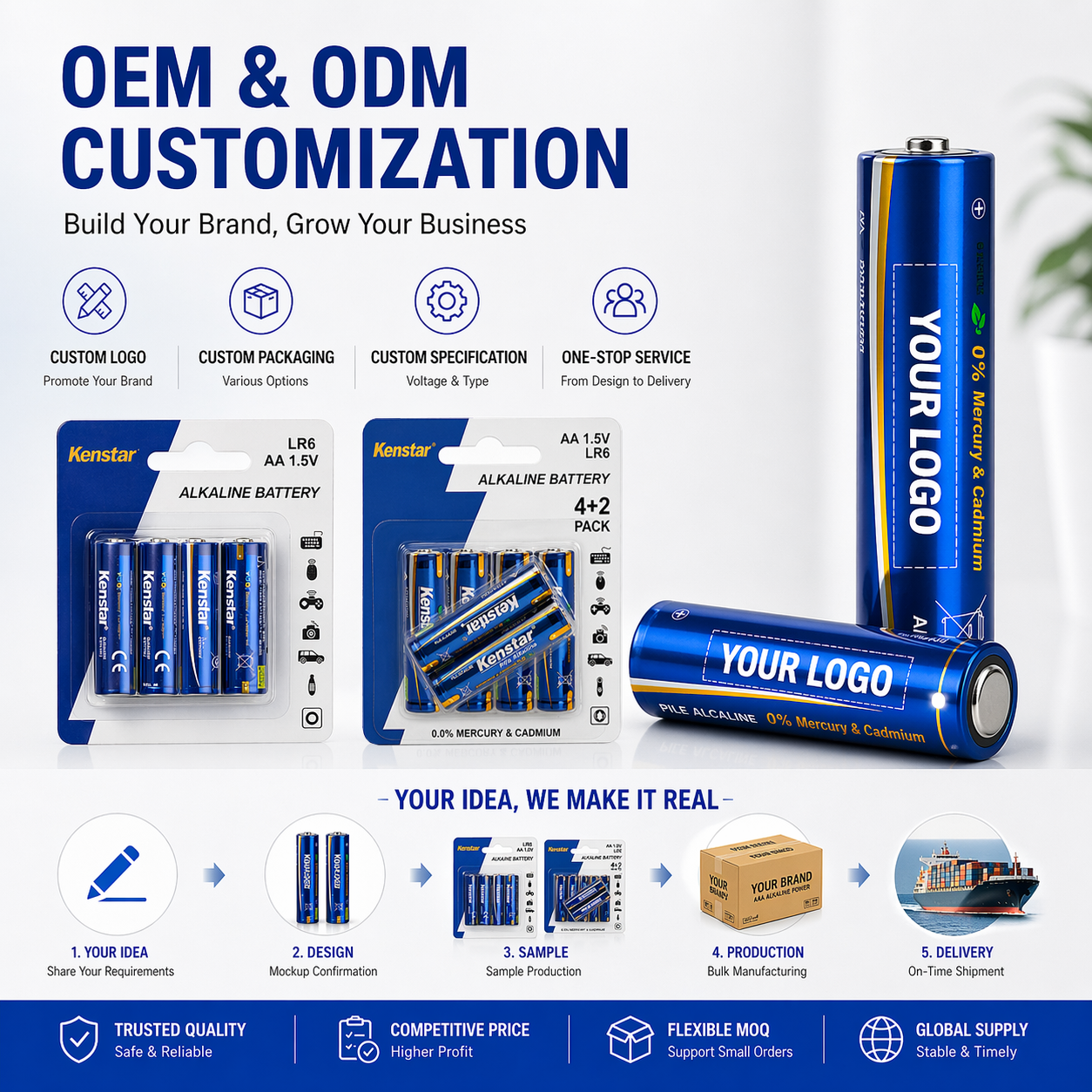
Custom alkaline battery packaging does more than display a logo; it shapes shelf appeal, compliance, and buyer confidence from the first glance. This article explains how to customize battery labels and cardboard sleeves in five practical steps, with a focus on free battery label design and the needs of OEM and ODM projects. You will learn what information to prepare, how to align artwork with battery size and pack structure, and which packaging details influence retail presentation and production efficiency. By the end, you will have a clear path to move from initial concept to a market-ready private label package.
Why Free Battery Label Design Matters for Alkaline Batteries
In the highly competitive alkaline battery market, custom packaging and branding are not merely aesthetic choices; they are critical drivers of retail shelf performance. In our experience managing OEM and ODM projects, buyers often fall into the trap of prioritizing the lowest possible unit price while neglecting the visual and structural quality of the battery label and packaging. This unit price myth ignores the reality that poor packaging leads to higher return rates, diminished brand trust, and lost retail opportunities. Free battery label design services bridge this gap, allowing buyers to align a competitive cost structure with premium presentation.
A successful private label strategy requires a manufacturing partner capable of executing design seamlessly alongside robust production. For example, Ningbo Johnson New Eletck Co., Ltd. provides a verifiable foundation for such projects. Operating as a factory-direct supplier, the facility encompasses approximately 20,000 square meters with an asset scale of $20 million. Supported by over 150 employees and 10 automated production lines, the factory offers a transparent cost structure and shorter communication links. This setup is particularly advantageous for importers, distributors, and supermarket chains looking to develop their own brands or utilize the established Kenstar brand framework.
How battery labels, sleeves, and cards affect retail appeal
The visual appeal of battery labels, cardboard sleeves, and blister cards directly influences consumer purchasing decisions in retail environments. A well-designed aluminum foil label with crisp, high-contrast colors can increase brand recognition and justify a 15% to 20% retail premium compared to generic alternatives. Furthermore, the structural integrity of the packaging—such as durable blister cards or reinforced cardboard sleeves—protects the product during transit and prevents pegboard tear-offs in retail aisles.
We consistently advise buyers to evaluate the total landed cost rather than just the bare cell price. A supplier offering free label design and packaging consultation helps mitigate communication risks and design errors that might otherwise cause production delays. By integrating the design phase directly with the manufacturing workflow, buyers ensure that all retail packaging meets local regulatory requirements, shelf-space dimensions, and consumer expectations without incurring standalone agency fees.
How to present supplier capability before design work
Before initiating any design work, it is crucial to validate the supplier’s manufacturing and compliance capabilities. A credible supplier should be able to demonstrate an established quality management system. Ningbo Johnson New Eletck Co., Ltd., for instance, operates under ISO9001 and BSCI certifications, ensuring that both quality control and social compliance standards are met. Their product range covers alkaline, carbon, NiMH, button, and rechargeable batteries, providing a comprehensive catalog for diverse retail needs.
Presenting these capabilities early establishes trust and ensures that the subsequent design work is grounded in physical reality. Suppliers should provide documentation supporting mercury-free and cadmium-free compliance, and cooperate with procurement audits involving RoHS, REACH, and SGS testing. By confirming these parameters first, buyers eliminate the risk of designing a beautiful label for a product that ultimately fails customs or retail compliance checks.
Section Summary:
- Custom label design directly impacts retail shelf appeal and can justify higher margins.
- Evaluating total cost structure is more effective than chasing the lowest unit price myth.
- Factory-direct suppliers with robust automated lines (e.g., 10 lines) shorten communication and lower costs.
- Supplier capability, including ISO9001 and BSCI certifications, must be verified before design begins.
- Environmental compliance (mercury/cadmium-free, RoHS, REACH) should be integrated into the initial supplier assessment.
What Is the 5-Step Process for Free Battery Label Design
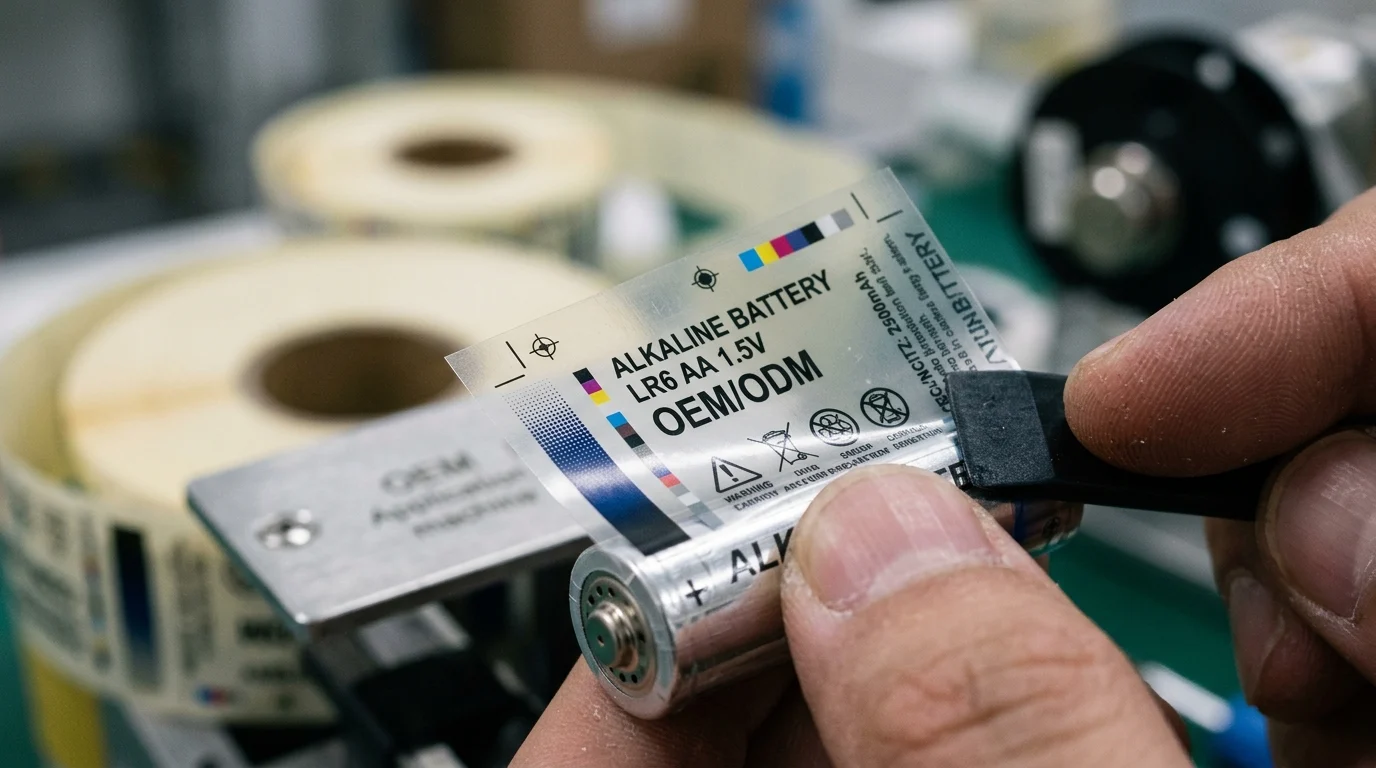
Transitioning from a product concept to a shelf-ready private label battery requires a structured, predictable workflow. We utilize a standardized 5-step process for free battery label design to eliminate guesswork, align buyer expectations with factory capabilities, and accelerate the time-to-market. This methodology ensures that technical specifications, visual branding, and physical packaging are developed in a logical sequence, preventing costly revisions late in the production cycle.
How to map the workflow from model selection to approval
The 5-step process is designed to map the entire workflow from initial inquiry to mass production approval. Step one involves confirming the battery model, capacity, and performance metrics, ensuring the core product meets the target market’s demands. Step two transitions into the free design phase, where the supplier’s design team turns buyer inputs into initial digital drafts, typically within a 5-day turnaround window. Step three focuses on selecting the appropriate secondary packaging, such as blister cards or shrink wrap, tailored to the retail channel.
Step four is the physical sampling stage. Once the digital artwork is approved, the factory produces physical samples—often within 7 days—allowing the buyer to evaluate color accuracy, label adhesion, and overall aesthetics. Finally, step five is the trial order phase. Buyers usually initiate a trial run (e.g., 50,000 to 100,000 pieces) to validate batch consistency, packaging strength during transit, and market reception before committing to high-volume, long-term contracts.
Which buyer inputs should be summarized before design
To ensure the 5-day design draft is accurate and actionable, buyers must provide specific, summarized inputs before the design team begins their work. We require buyers to supply high-resolution vector logos (AI or EPS formats), precise Pantone color codes for brand consistency, and a clear outline of mandatory regulatory marks required for their specific region (such as the WEEE crossed-out wheelie bin or CE marks). Incomplete inputs often lead to mismatched expectations and multiple revision cycles.
Additionally, buyers should summarize their target demographic and retail environment. For instance, a battery intended for a premium electronics store will require a different visual language—perhaps utilizing metallic inks or minimalist typography—compared to a value-pack intended for a discount supermarket. Providing a comprehensive design brief upfront allows the OEM supplier to leverage their free design services effectively, producing artwork that resonates with the end consumer while adhering to technical printing tolerances.
How OEM buyers use a structured design process
Experienced OEM buyers rely on this structured design process to mitigate cross-border communication risks. By separating the performance validation (Step 1) from the aesthetic design (Step 2), buyers prevent the common mistake of finalizing packaging artwork before the battery’s electrical specifications are locked. This structured approach also clarifies intellectual property boundaries, ensuring that private label assets are securely managed while utilizing the supplier’s structural templates.
Furthermore, this workflow allows buyers to easily integrate established brand frameworks. For example, buyers who do not wish to create a private label from scratch can opt to use the Kenstar brand layout, modifying only specific regional text or promotional callouts. This flexibility accelerates the procurement cycle, allowing importers to focus on distribution strategy rather than getting bogged down in micro-managing graphic design elements.
Section Summary:
- A 5-step process (Specs, Draft, Packaging, Sample, Trial) ensures predictable OEM project execution.
- Digital design drafts should typically be delivered within a 5-day turnaround to maintain project momentum.
- Buyers must provide vector logos, Pantone codes, and regulatory requirements upfront to avoid revisions.
- Separating performance validation from aesthetic design prevents costly artwork changes.
- Leveraging existing frameworks, like the Kenstar brand, can significantly accelerate time-to-market for distributors.
How to Choose Alkaline Battery Models, Capacity, and Performance
A critical rule in private label procurement is that performance specifications must be locked in before any packaging design begins. Customizing a battery label without first confirming the underlying cell’s capacity, discharge rate, and lifespan is a recipe for compliance failure. The label must accurately reflect the battery’s true performance to avoid consumer deception claims and retail chargebacks. Therefore, selecting the right alkaline battery model and validating its performance under specific test conditions is the foundational step.
Why AA, AAA, and other formats should be confirmed early
The first technical decision involves confirming the form factors required for the product line. AA (LR6) and AAA (LR03) are the most ubiquitous formats, dominating household electronics, remote controls, and toys. However, buyers must also consider the specific application of the battery to determine the internal chemistry formulation. High-drain devices require different internal resistance profiles compared to low-drain applications.
Confirming these formats early allows the design team to prepare the correct die-cut templates for the aluminum foil labels. A label designed for a AA battery cannot be proportionally scaled down to a AAA without adjusting the typography to maintain legibility of mandatory warnings and capacity claims. Early confirmation ensures that all regulatory text remains readable at the required font sizes (often a minimum of 1.2mm for compliance warnings).
What trade-offs matter in capacity and performance claims
Capacity and performance claims are not absolute numbers; they are highly dependent on the discharge test conditions. Buyers must understand the trade-offs between continuous discharge, intermittent discharge, and shelf life. For example, a battery might perform exceptionally well under a low-drain 20-ohm load but struggle under a high-drain 3.9-ohm continuous load. Manufacturers balance active materials (zinc and manganese dioxide) to optimize for specific use cases.
| Battery Size | Test Load | Discharge Mode | Minimum Cut-off Voltage | Typical Duration |
|---|---|---|---|---|
| AA (LR6) | 3.9 Ω | Continuous | 0.9V | 350 – 400 minutes |
| AA (LR6) | 10 Ω | 1h/day | 0.9V | 18 – 20 hours |
| AAA (LR03) | 5.1 Ω | Continuous | 0.9V | 130 – 150 minutes |
| AAA (LR03) | 20 Ω | 1h/day | 0.9V | 17 – 19 hours |
This table illustrates how varying loads impact the functional duration of the battery. When buyers make “long-lasting” claims on their custom labels, these claims must be backed by specific discharge curves and test reports. Overstating performance on the packaging based on mismatched test conditions exposes the brand to significant legal and reputational risks.
How buyers confirm model and performance requirements
Buyers confirm these model and performance requirements through rigorous sample testing and reviewing technical data sheets (TDS). A key metric to evaluate is batch consistency; the performance variance between cells in the same production run should ideally be less than 5%. Additionally, buyers must address the risk of leakage, which is a primary cause of consumer complaints.
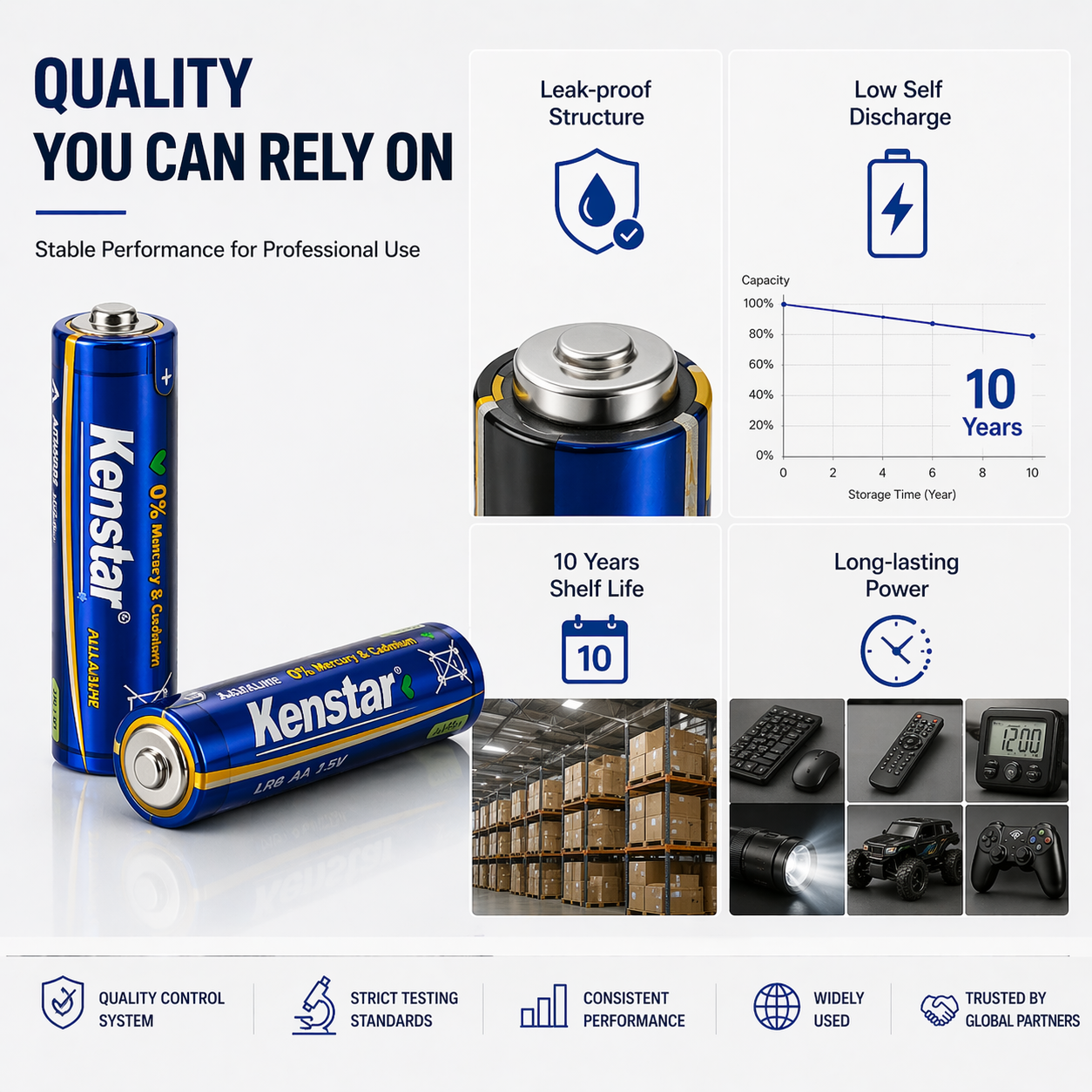
While no manufacturer can claim a 100% zero-leakage rate under abusive conditions, a qualified supplier reduces leakage risks through advanced structural design, premium sealing rings, and strict material selection. Buyers should request data on high-temperature and high-humidity aging tests (e.g., 60°C at 90% RH for 20 days) to validate the battery’s 5-to-10-year shelf life before approving the final label claims.
Section Summary:
- Performance specifications and capacity must be fully validated before initiating packaging design.
- Label templates require early confirmation of form factors (AA/AAA) to ensure regulatory text legibility.
- Battery capacity is relative to the discharge load; claims must match specific test conditions (e.g., 3.9Ω vs 20Ω).
- Batch consistency should maintain a performance variance of less than 5% to ensure reliable consumer experiences.
- Leakage risks are mitigated through structural design and validated via accelerated aging tests, supporting 5-10 year shelf-life claims.
How to Customize Battery Labels, Logos, and Packaging
With the internal performance validated, the focus shifts to the exterior: customizing the battery labels, logos, and secondary packaging. The packaging serves a dual purpose—it acts as the primary marketing vehicle on the retail shelf and provides essential logistical protection. Navigating the choices between aluminum foil labels, blister cards, and color boxes requires a strategic alignment with your target sales channels and budget constraints.
What to specify on the battery label
The aluminum foil label applied directly to the battery cell is the most critical piece of real estate. It must clearly display the brand logo, nominal voltage (e.g., 1.5V), battery size (AA/LR6), and correct polarity markings (+ and -). We strongly advise buyers to pay close attention to the placement of these elements; a common mistake is positioning the polarity marks where they are obscured when the battery is inserted into a device.
Furthermore, the label must incorporate mandatory regulatory and environmental compliance identifiers. This typically includes the crossed-out dustbin symbol for WEEE compliance, warnings against short-circuiting or disposing of the battery in fire, and declarations of being mercury-free and cadmium-free (0% Hg/Cd). Ensuring these elements are present and legible prevents customs seizures and retail rejections.
How to compare blister cards, color boxes, and shrink wrap
Secondary packaging dictates how the product is shipped, displayed, and purchased. The choice between shrink wrap, blister cards, and color boxes significantly impacts both the unit cost and the channel suitability. Shrink wrap is the most cost-effective solution, ideal for B2B distribution, industrial use, or high-volume online sales where retail display is unnecessary. However, it offers minimal branding space.
| Packaging Type | Typical Cost Premium | Target Channel | Key Advantage | Key Disadvantage |
|---|---|---|---|---|
| Shrink Wrap (e.g., 2-pack) | Base Cost | B2B, Industrial, E-commerce | Lowest cost, minimal waste | Poor retail visibility, low perceived value |
| Blister Card (e.g., 4-pack) | +$0.02 – $0.05 / pack | Supermarkets, Convenience Stores | High visibility, anti-theft pegboard ready | Higher packaging material cost |
| Color Box (e.g., 10-pack) | +$0.04 – $0.08 / box | Big Box Retailers, E-commerce | Premium feel, ideal for multi-packs | Takes up more shelf volume |
Blister cards are the standard for physical retail channels. They provide a large billboard for the custom design, protect the batteries from physical damage, and feature a punch-hole for pegboard displays. Color boxes are increasingly popular for larger multipacks (e.g., 10 or 24 pieces) sold in club stores or online, offering a premium unboxing experience and better structural integrity during courier shipping. Buyers must match the packaging type to their specific distribution channel to avoid overspending on unnecessary packaging or underspending and losing retail visibility.
How suppliers support artwork and free design services
A capable supplier provides comprehensive artwork support to bridge the gap between the buyer’s concept and the final printed product. This includes free design services to adapt client-provided logos and brand colors to the specific dimensions of the chosen packaging. A critical aspect of this support is color calibration. Suppliers should utilize the Pantone Matching System (PMS) to ensure brand colors are reproduced accurately across different materials (aluminum foil vs. cardboard), maintaining a Delta E color difference of less than 2.0 to ensure visual consistency.
For buyers looking for a faster route to market, leveraging an established framework like the Kenstar brand is highly effective. Ningbo Johnson New Eletck Co., Ltd. supports both fully customized private labels and the utilization of the Kenstar design. By choosing the Kenstar framework, buyers benefit from pre-optimized layouts that already account for regulatory marks, color contrast, and print tolerances, significantly reducing the design iteration time while still allowing for localized text modifications.
Section Summary:
- Aluminum foil labels must clearly display polarity, voltage, and mandatory environmental warnings (e.g., 0% Hg/Cd).
- Packaging choices must align with the sales channel: shrink wrap for B2B, blister cards for retail, color boxes for multipacks.
- Blister cards add approximately $0.02 to $0.05 per pack but are essential for pegboard retail environments.
- Strict color calibration (Delta E < 2.0) is necessary to ensure brand consistency across different packaging materials.
- Utilizing established design frameworks like Kenstar can bypass lengthy design iterations and accelerate market entry.
How to Validate Samples, Compliance Files, and Supplier Capability
The final phase of the custom packaging process transitions from digital approvals to physical validation. Validating samples, reviewing compliance files, and assessing the supplier’s execution capability through a trial order are non-negotiable steps before authorizing mass production. This phase ensures that the theoretical design and performance specifications hold up under real-world manufacturing and logistical conditions.
What to check during the sample stage
During the sample stage, buyers typically receive physical prototypes within 7 days of artwork approval. This sample review requires a balanced assessment of both appearance and performance. Visually, buyers must check the print quality of the aluminum foil label, ensuring there is no color bleeding, the text is crisp, and the label is applied tightly without air bubbles or misaligned seams. The packaging strength must also be tested; blister cards should resist delamination, and cardboard sleeves should maintain their structural integrity.
Performance validation during the sample stage involves independent testing of the cells. Buyers should conduct discharge tests to verify the capacity claims and perform physical stress tests, such as a 1.2-meter drop test, to ensure the internal structure and external packaging can withstand typical handling impacts. It is crucial not to sacrifice performance validation in the rush to approve the visual aesthetics.
Which checklist connects sample review with compliance
Sample validation must be tightly coupled with a review of the supplier’s compliance files. A physical sample is only viable if it is backed by the appropriate documentation required for importation and retail sale. Buyers should use a checklist that connects the physical product to the paperwork. This includes verifying that the factory can provide relevant ISO9001 and BSCI audit reports, which confirm quality management and ethical manufacturing practices.
Furthermore, the environmental claims printed on the custom label must be substantiated by third-party testing. Suppliers should be able to support procurement audits with RoHS, REACH, and SGS test reports confirming the absence of restricted hazardous substances. Relying on a supplier that can seamlessly provide these documents, based on actual current files, significantly reduces the risk of customs delays and compliance penalties in stringent markets like the EU and North America.
How to assess supplier capability with real buyer cases
Assessing supplier capability is best done by examining real buyer cases and executing a structured trial order.
Key Takeaways
- The most important conclusions and rationale for free battery label design, Alkaline Battery, OEM, ODM
- Specs, compliance, and risk checks worth validating before you commit
- Practical next steps and caveats readers can apply immediately
Frequently Asked Questions
What does free battery label design usually include?
It typically covers label artwork, color matching, logo placement, and basic cardboard sleeve or blister card layout based on your battery model and packing style.
What information should I prepare before requesting a custom alkaline battery label?
Send your battery model, pack size, logo files, target market, language, compliance needs, and preferred packaging type to speed up design and approval.
Can zscells.com support OEM and ODM alkaline battery packaging?
Yes. ZSCELLS supports private label OEM and ODM projects, including custom battery labels, cardboard sleeves, and retail packaging for different markets.
How can I check if the battery packaging design meets import requirements?
Confirm required marks, warning text, and environmental compliance such as RoHS, REACH, and mercury-free or cadmium-free claims before final artwork approval.
Why should I focus on total cost instead of only battery unit price?
Better labels and sleeves reduce design errors, retail damage, and returns, helping your brand sell more reliably and avoid hidden costs after shipment.
Post time: Apr-24-2026


