
Why Start Supplier Vetting for Alkaline Batteries
In my experience managing global procurement for consumer electronics and battery categories, the most common trap buyers fall into is prioritizing unit price over supplier vetting. When sourcing alkaline batteries, the initial decision point often pits aggressively low quotes against the higher perceived costs of certified manufacturers. However, starting with price rather than compliance is a fundamental error. If a supplier cannot pass a rigorous certification and capability audit, their low price is simply a down payment on future supply chain failures, customs seizures, or catastrophic product liability claims.
A structured vetting process establishes a baseline of trust and operational capability before a single sample is shipped. By mapping out a clear certification checklist, procurement teams can systematically filter out traders posing as factories and manufacturers cutting corners on raw materials. In this guide, I will walk you through the exact step-by-step methodology I use to audit alkaline battery suppliers, ensuring that every vendor on your final roster can deliver consistent quality, verifiable compliance, and scalable production.
Key sourcing risks to control early
The global battery market is fraught with hidden risks that can easily derail a procurement strategy if not controlled early. One of the primary risks is the pervasive presence of trading companies masquerading as direct manufacturers. When you deal with an undisclosed middleman, you lose control over batch-to-batch consistency and supply chain transparency. A sudden shift in the trader’s sourcing can result in an unexpected drop in battery performance, directly impacting your brand’s reputation.
Another critical risk is regulatory non-compliance. Alkaline batteries are subject to strict environmental and safety regulations, including heavy metal restrictions under EU RoHS and REACH directives. Sourcing from a supplier lacking rigorous material controls can lead to shipments containing excessive mercury or cadmium. I have seen cases where up to 20% of unvetted imported battery shipments face severe customs delays or outright rejection due to missing or fraudulent compliance documentation.
Finally, raw material volatility and poor quality control present significant financial risks. Alkaline batteries require high-purity zinc and manganese dioxide to prevent internal gas generation and leakage. Suppliers who lack stringent incoming material inspections often produce cells with a high risk of leakage, which can destroy the end-user’s electronic devices and trigger costly recall campaigns.
Why early screening reduces procurement failures
Early screening acts as a vital filtration mechanism that drastically reduces these procurement failures. By implementing a strict documentation and certification review before engaging in commercial negotiations, you eliminate high-risk vendors from your pipeline. This preemptive approach saves countless hours that would otherwise be wasted on testing substandard samples or auditing fundamentally flawed facilities.
When you demand verifiable proof of quality management systems and environmental compliance upfront, you set a professional tone that discourages opportunistic suppliers. It forces potential partners to demonstrate their administrative maturity and technical readiness. If a supplier hesitates or provides evasive answers when asked for standardized test reports, it is an immediate red flag that their internal processes are not built for international B2B trade.
To summarize this initial phase, I recommend focusing on these core checkpoints before moving forward:
- Establish a strict ‘compliance first, price second’ filtering sequence.
- Demand verifiable proof of direct manufacturing status to eliminate undisclosed middlemen.
- Identify and mitigate the risks of heavy metal contamination and leakage early in the dialogue.
- Require baseline environmental certifications before investing time in sample testing.
How to Verify Factory Credentials
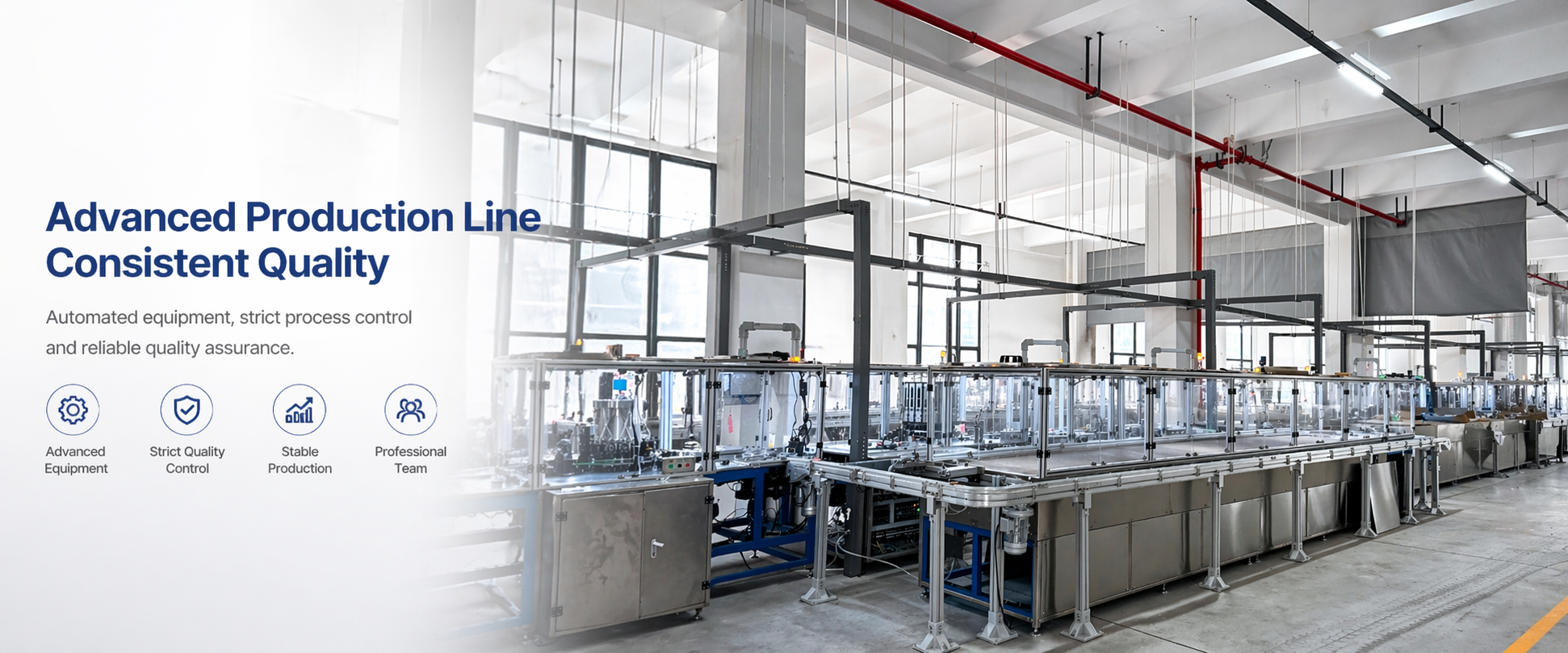
Once you have established the necessity of vetting, the first operational step is separating authentic manufacturers from trading companies and unqualified workshops. In the B2B battery trade, a polished website and fluent English-speaking sales representatives do not guarantee factory ownership. You must look past the marketing facade and dig into the legal and structural realities of the business.
Verifying a factory’s credentials requires a combination of legal document review, system audits, and physical capacity checks. I always look for suppliers that can offer a transparent, verifiable profile. For instance, a benchmark manufacturer like Ningbo Johnson New Eletck Co Ltd provides a clear template for what to look for: verifiable direct factory supply, approximately $20 million in assets, roughly 20,000 square meters of manufacturing space, and a dedicated workforce of over 150 employees operating 10 automated production lines. This level of verifiable infrastructure is what separates a reliable partner from a high-risk gamble.
Business licenses and factory identity checks
The foundation of factory verification begins with the business license. When sourcing from China, for example, you must request the official business license and cross-reference the unified social credit code on the government’s enterprise credit information publicity system. This step confirms the legal existence of the entity and reveals crucial details about its approved business scope.
Pay close attention to the registered capital and the specific wording in the business scope. A true manufacturer will have terms like ‘manufacturing,’ ‘production,’ or ‘assembly’ of primary batteries explicitly listed. If the scope only mentions ‘sales,’ ‘trading,’ or ‘technology development,’ you are likely dealing with a trading company. Furthermore, the registered capital provides a rough indicator of the company’s financial stability; a battery plant requires significant capital expenditure, so a suspiciously low registered capital (e.g., under $500,000 equivalent) warrants intense scrutiny.
Additionally, verify the physical address. The registered address on the license should ideally match the factory location where your goods will be produced. If the registered address is in a downtown commercial high-rise while the ‘factory’ is located in another province, you must demand a clear explanation and verifiable proof of the relationship between the corporate office and the manufacturing site.
Quality systems and social compliance review
Legal existence is only the baseline; the next step is evaluating the factory’s operational maturity through its quality management and social compliance systems. The absolute minimum requirement for any serious alkaline battery supplier is an active, verifiable ISO9001 certification. However, simply having the certificate is not enough. You must verify the certificate number with the issuing body to ensure it is current and covers the specific product categories you are purchasing (e.g., alkaline, carbon zinc, Ni-MH, button cells, or rechargeable batteries).
Beyond quality management, social compliance has become a non-negotiable requirement for major retailers and distributors globally. Assessing a supplier’s Business Social Compliance Initiative (BSCI) rating provides deep insights into their labor practices, workplace safety, and ethical standards. A factory that maintains a strong BSCI rating demonstrates a commitment to sustainable operations and minimizes the risk of supply chain disruptions caused by labor disputes or regulatory crackdowns.
When reviewing these systems, ask for the full audit reports, not just the summary certificates. The detailed reports reveal minor non-conformities and the factory’s corrective action plans. A supplier that transparently shares these reports and discusses their continuous improvement processes is far more reliable than one claiming a flawless, problem-free environment.
Production capacity and workforce validation
The final pillar of credential verification is assessing production capacity and workforce stability. A supplier may have the right licenses and certificates, but if they lack the physical capacity to meet your volume requirements, they will inevitably outsource your orders to unvetted subcontractors. This is where you must demand specific data regarding their production infrastructure.
Using our benchmark example, a reliable supplier should be able to prove they operate multiple automated production lines—such as the 10 automated lines utilized by Ningbo Johnson New Eletck Co Ltd. Automated lines are critical for alkaline battery production because they minimize human error, ensure consistent assembly pressure, and drastically reduce the risk of internal short circuits and leakage. You should request videos of the production lines in operation, focusing on the electrolyte injection and sealing stations.
Workforce validation is equally important. Inquire about the ratio of quality control (QC) staff to general production workers. A healthy manufacturing environment typically maintains a QC-to-worker ratio of at least 1:10. Furthermore, ask about worker retention rates; high turnover in the assembly and inspection stages directly correlates with increased defect rates.
To summarize this phase, ensure you check off these critical credential verification points:
- Cross-reference the business license to confirm direct manufacturing status and adequate registered capital.
- Verify the validity and scope of ISO9001 and BSCI certifications with the issuing bodies.
- Demand concrete proof of production capacity, such as the number of automated lines and facility square footage.
- Audit the workforce structure, specifically the ratio of dedicated QC personnel to production staff.
How to Assess Product Quality and Testing Capability
Verifying the factory’s administrative credentials gives you the green light to proceed, but the ultimate proof of a supplier’s viability lies in their product engineering and testing capabilities. Alkaline batteries are deceptively complex electrochemical systems. Small deviations in raw material purity or sealing techniques can lead to catastrophic failures, such as leakage inside an expensive electronic device.
When assessing product quality, you must move beyond marketing claims like ‘zero leakage’ or ‘ultra-long life.’ Instead, focus on standardized, verifiable metrics. Every technical parameter claimed by the supplier—from discharge curves to shelf life—must be re-verifiable through independent third-party laboratories. If a supplier’s data cannot be replicated by an external lab, their internal quality control is fundamentally flawed.
IEC 60086 and core technical checkpoints
The global benchmark for primary battery performance and safety is the IEC 60086 standard. A qualified supplier should be intimately familiar with this standard and design their testing protocols around it. When reviewing a supplier’s technical capabilities, the first document I request is the discharge curve data under various load conditions (e.g., 10-ohm, 43-ohm, and 3.9-ohm continuous or pulsed discharges). This data reveals the true capacity and stability of the battery under different usage scenarios.
Leakage control is arguably the most critical technical checkpoint. Alkaline batteries use a highly corrosive potassium hydroxide electrolyte. You must interrogate the supplier’s sealing technology. Do they use specialized nylon sealing rings? What is their anti-corrosion treatment for the steel can? Ask for their high-temperature and high-humidity aging test results. A robust alkaline battery should withstand 60°C at 90% relative humidity for at least 20 days without showing any signs of leakage or severe voltage drop.
Shelf life is another easily verifiable parameter. Premium alkaline batteries typically guarantee a 5 to 10-year shelf life. To validate this, request the supplier’s accelerated aging data. They should be able to demonstrate that their cells retain at least 80-85% of their initial capacity after one year of accelerated storage testing. If they cannot provide this historical data, their shelf life claims are purely speculative.
Sample testing and in-process quality control
Sample testing is a critical phase, but testing a golden sample sent by the sales team is not enough. You must assess the supplier’s in-process quality control (IPQC) to ensure that the mass-produced units will match the sample’s performance. Consistency across batches is the true hallmark of a mature manufacturer.
I recommend implementing a rigorous sample testing protocol that involves blind testing multiple batches. When you receive samples, send a subset to a certified third-party lab (such as SGS or TUV) to verify capacity, heavy metal content, and leakage resistance. Compare these independent results against the supplier’s internal test reports. Any significant discrepancy indicates a lack of process control or, worse, intentional data manipulation.
During the factory audit, pay close attention to their IPQC checkpoints. How frequently do they calibrate their testing equipment? Do they perform 100% inline OCV (Open Circuit Voltage) and CCV (Closed Circuit Voltage) testing before packaging? A supplier committed to consistency will have automated sorting machines that automatically reject cells falling outside the strict voltage and internal resistance tolerances.
Lab capability and defect prevention
A supplier’s in-house laboratory capability is a direct indicator of their commitment to defect prevention. While third-party testing is essential for final validation, the factory must have the internal resources to conduct daily lot-acceptance testing. A well-equipped battery lab should feature programmable electronic loads, climate chambers for environmental testing, and atomic absorption spectrometers for raw material purity analysis.
Ask the supplier about their target defect rates and how they track them. Industry leaders aim for a defect rate of less than 50 Parts Per Million (PPM). If a supplier claims a ‘zero defect’ rate, they are either not measuring properly or not telling the truth. Instead, look for a supplier that openly discusses their PPM metrics and demonstrates a clear Corrective and Preventive Action (CAPA) process when defects are identified.
| Testing Parameter | Relevant Standard | Acceptable B2B Baseline | Verification Method |
|---|---|---|---|
| Heavy Metals (Hg, Cd, Pb) | EU Directive 2006/66/EC | Hg < 0.0001%, Cd < 0.001% | Independent SGS/TUV Report |
| Discharge Capacity | IEC 60086-2 | Varies by load (e.g., >300 mins at 3.9Ω) | In-house data + Third-party verification |
| Leakage Resistance | IEC 60086-1 | No leakage at 60°C / 90% RH for 20 days | Accelerated aging lab reports |
| Shelf Life Retention | IEC 60086-1 | >80% capacity retention after 5 years | Historical batch testing data |
| Dimensional Tolerances | IEC 60086-2 | Strict adherence to max/min mm limits | Inline automated caliper sorting |
To summarize this phase, ensure your product capability assessment covers these core checkpoints:
- Demand verifiable discharge curves and accelerated aging data based on IEC 60086 standards.
- Ensure all technical parameters, especially heavy metal limits, can be re-verified by independent labs.
- Audit the in-process quality control to guarantee batch-to-batch consistency.
- Evaluate the in-house lab equipment to ensure the supplier can proactively prevent defects.
Which Compliance and Delivery Factors Matter Most
A supplier may produce a technically flawless battery, but if they cannot navigate the complex web of international compliance or fail to deliver on time, they are not a viable B2B partner. The transition from product approval to commercial execution hinges on two major pillars: the readiness of their compliance document package and the flexibility of their delivery mechanisms.
In international procurement, missing documents mean seized shipments. Furthermore, rigid production schedules can leave you out of stock during critical peak seasons. Therefore, evaluating a supplier’s administrative readiness and supply chain resilience is just as critical as testing their physical product.
Required compliance documents and export files
When importing alkaline batteries, certain documents must be readily available before you even place a trial order. You should not have to wait weeks for a supplier to ‘apply’ for basic certifications. A mature manufacturer will have a comprehensive, up-to-date document pack ready to share. This pack must include explicit declarations that the batteries are mercury-free and cadmium-free, backed by recent SGS test reports.
For the European market, compliance with the RoHS and REACH directives is mandatory. The supplier must provide valid test reports proving that the batteries and their packaging materials do not contain restricted hazardous substances or substances of very high concern (SVHC). Although alkaline batteries are generally exempt from the stringent UN38.3 dangerous goods testing required for lithium batteries (often shipping under Special Provision 130), a standardized and accurate Material Safety Data Sheet (MSDS) or Safety Data Sheet (SDS) is still strictly required by freight forwarders and customs authorities.
Review these documents meticulously. Check the expiration dates and ensure the applicant name on the test reports matches the factory’s official business license. If the reports are registered under a different company name, you must demand a clear explanation, as this often indicates outsourced production or a trading company setup.
MOQ, lead time, and replenishment planning
Delivery capability is often tested during peak sourcing seasons, such as the lead-up to Q4 holidays or pre-Lunar New Year rushes. You need to assess the supplier’s Minimum Order Quantity (MOQ), standard lead times, and their mechanisms for handling urgent replenishment. For private label alkaline batteries, a standard B2B MOQ typically ranges from 50,000 to 100,000 pieces per SKU, depending on the packaging complexity.
Lead time is a critical metric. A highly automated factory should be able to turn around a standard order in 30 to 45 days. However, the real question is how they manage peak season volatility. Do they require a 90-day rolling forecast? Do they hold strategic buffers of raw materials like zinc powder and steel cans to absorb sudden demand spikes? A supplier that operates strictly on a just-in-time basis with no material buffering will inevitably fail you when global supply chains tighten.
Discuss their replenishment response. If a specific SKU sells out faster than anticipated, can they expedite a smaller batch? Understanding their flexibility regarding batch stability and rapid restocking will help you optimize your own inventory holding costs and channel strategy.
Private label and packaging readiness
For most B2B buyers, batteries are sold under a private label or a specific channel brand. Therefore, the supplier’s readiness to handle customized packaging is a major operational factor. Packaging is not just about aesthetics; it is heavily regulated. The supplier must be adept at printing mandatory compliance symbols, such as the crossed-out wheeled bin (WEEE directive) and appropriate recycling codes, accurately on blister cards and shrink wraps.
Evaluate their packaging supply chain. Do they print blister cards in-house, or do they rely on external printing partners? If external, what is the MOQ for the packaging materials alone? Often, the battery MOQ is manageable, but the packaging supplier demands a massive minimum print run, tying up your capital. A capable supplier will offer flexible solutions, such as holding pre-printed packaging inventory for future drawdowns.
| Delivery & Commercial Tier | Typical Volume | Estimated MOQ (per SKU) | Standard Lead Time | Packaging Flexibility |
|---|---|---|---|---|
| Tier 1 (Strategic Partner) | >5M pcs/year | 100,000 pcs | 30 Days | High (Custom blisters, retail-ready displays) |
| Tier 2 (Standard B2B) | 1M – 5M pcs/year | 50,000 pcs | 45 Days | Medium (Standard blister cards, shrink wraps) |
| Tier 3 (Spot Buyer/Trader) | <1M pcs/year | 10,000 |
How to Build a Supplier Scorecard and Decision Process
Key Takeaways
- Wholesale sourcing and supply-chain implications for Supplier Vetting Process, Alkaline Battery
- Specifications, compliance, and commercial terms buyers should validate
- Actionable recommendations for distributors and procurement teams
Frequently Asked Questions
What should I check first when vetting an alkaline battery supplier?
Start with compliance, not price. Verify business license, factory status, and core certifications before requesting samples or negotiating terms.
How can I tell if a supplier is a real battery factory or just a trader?
Ask for factory audit records, production-line photos/videos, business registration, and proof of manufacturing address. Cross-check details with site visits or third-party inspections.
Which certifications matter most for alkaline battery sourcing?
Focus on ISO 9001, RoHS, and REACH-related compliance documents. Also request recent test reports showing heavy metal control and leakage performance.
Why is heavy metal compliance so important for alkaline batteries?
Non-compliant cells can trigger customs holds, rejections, and legal risk. Ask suppliers for material declarations and lab reports confirming mercury and cadmium limits.
Where can I review ZSCELL’s factory and certification information?
You can check ZSCELL’s factory and qualification pages on zscells.com to review manufacturing background, certifications, and supplier vetting details.
Post time: Apr-23-2026


